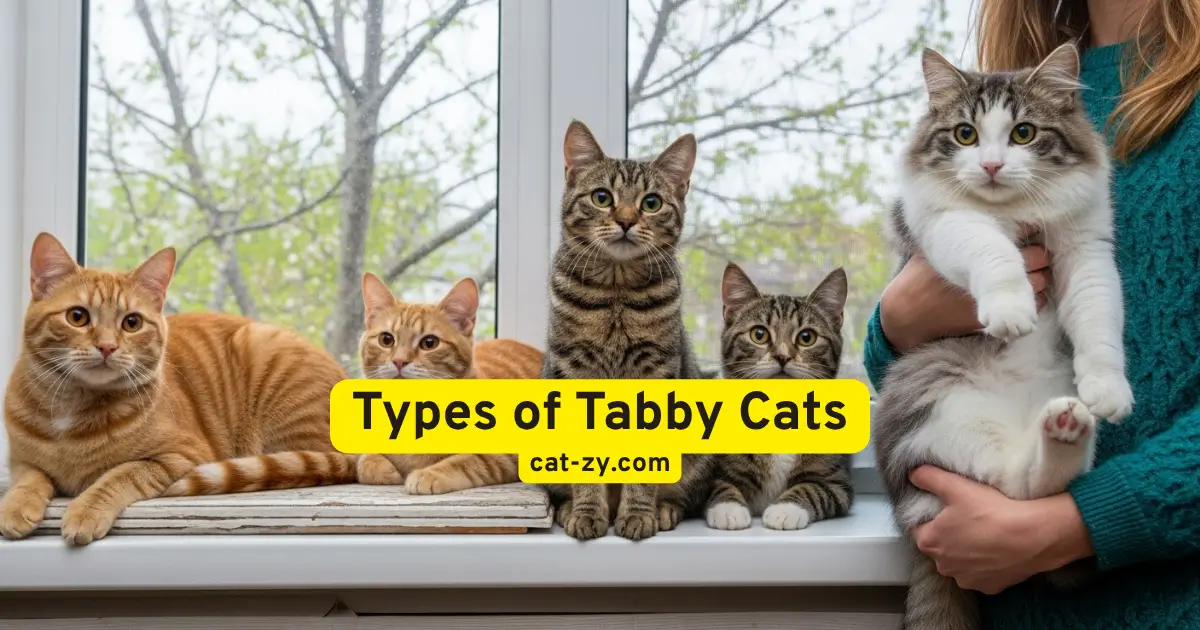
5 Mesmerizing types of tabby cats: Astonishing Secrets Exposed

If you love cats, you’ve probably seen the beauty of tabby cats. Their unique patterns and colors are loved by many. It’s easy to see why tabby cats are so popular worldwide.
The different types of tabby cats showcase many patterns, from classic stripes to detailed dots. Exploring the types of tabby cats reveals their special traits. Whether you own a cat or love them, learning about these patterns can make you appreciate them even more.
Table of Contents
The Fascinating World of Tabby Cats
If you love cats, you’ve probably noticed how special tabby cats look. When exploring types of tabby cats, it’s important to know that ‘tabby’ doesn’t refer to a specific breed. It describes a unique coat pattern that many cat lovers find captivating.
What Makes a Cat a “Tabby”?
A cat is called a tabby because of its coat pattern. This pattern often includes stripes, dots, or a mix of both. The tabby pattern has a background color with patterns on top. This look comes from how genetic mixing creates hair color.
The Genetic Basis of Tabby Patterns
The tabby pattern’s genetics start with the agouti gene. This gene controls how pigment spreads in hair. Other genes work with the agouti gene to decide the tabby pattern. Knowing about these genetics shows how complex and beautiful tabby patterns are.
History and Origins of Tabby Cats
The History of Tabby Cats Through the Ages
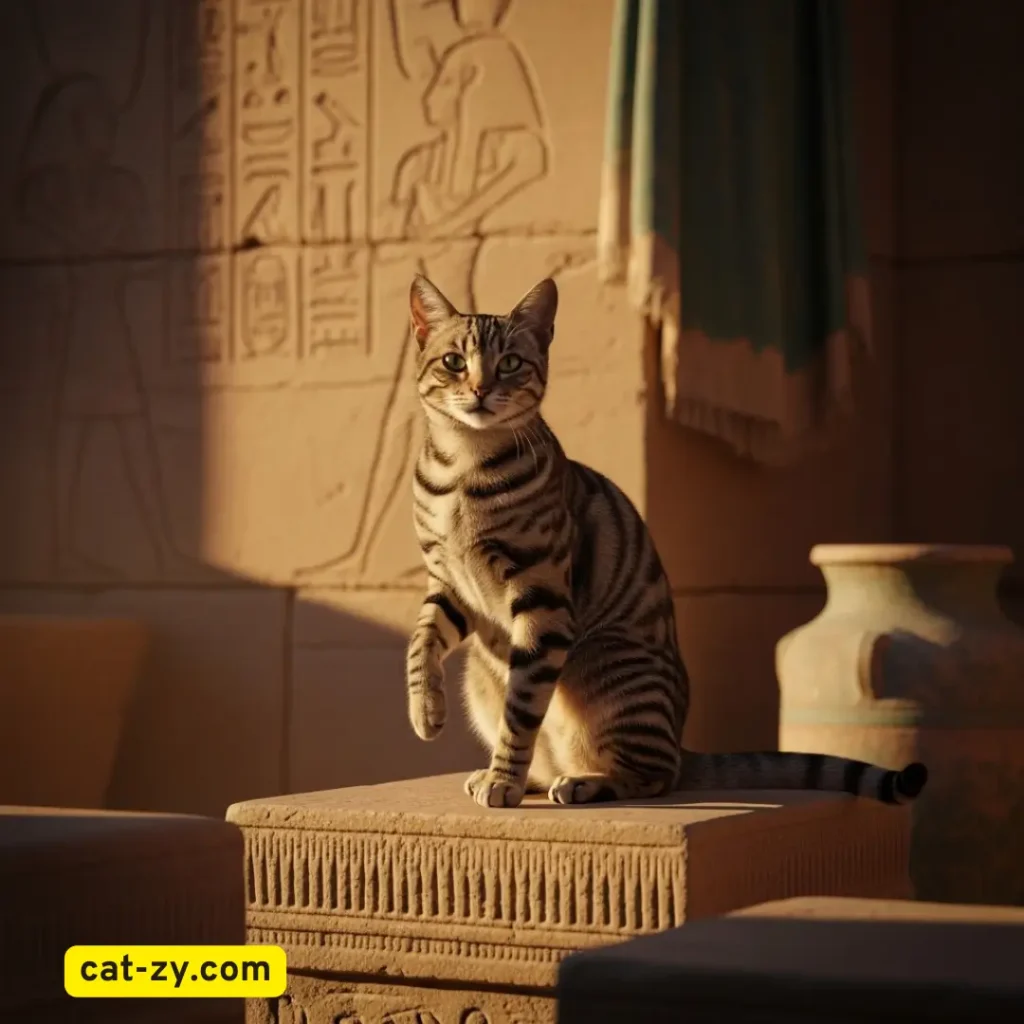
The story of tabby cats is as ancient as the domestication of cats themselves. Archaeological evidence suggests that cats were first domesticated around 10,000 years ago in the Fertile Crescent, and many of these early domestic cats likely bore tabby patterns. The tabby pattern is, in fact, the wild-type pattern – meaning it’s the natural, original coat pattern that wild cats possess.
Throughout history, tabby cats have been constant companions to humans. From ancient settlements to medieval villages, these striped and spotted felines have walked alongside humanity’s greatest civilizations. The tabby pattern provided excellent camouflage for cats in their wild state, allowing them to hunt effectively and avoid predators. This evolutionary advantage means that the genes for tabby patterns are incredibly strong and widespread in the feline population.
During the Middle Ages, cats – including tabbies – faced persecution in Europe, particularly during the witch trials. However, their practical value in controlling rodent populations meant they survived and thrived. By the Age of Exploration, tabby cats had traveled on ships around the world, helping control pest populations on long voyages and establishing populations in new lands.
Tabby Cats in Ancient Civilizations (Egyptian, Roman)
Ancient Egypt: The Sacred Tabbies
Ancient Egypt holds a special place in tabby cat history. The Egyptians revered cats, and many of the cats depicted in their art and mummified in their tombs show distinctive tabby markings. The African wildcat (Felis lybica), which is the primary ancestor of domestic cats, displays a mackerel tabby pattern – a clear link to today’s tabby cats.
The Egyptian Mau, one of the oldest domesticated cat breeds, prominently features spotted tabby patterns that mirror those seen in ancient Egyptian artwork. Cats were so valued in Egyptian society that they were associated with the goddess Bastet, a deity of home, fertility, and protection. Killing a cat, even accidentally, could result in severe punishment or even death.
Egyptian tabby cats were often mummified and buried with their owners, showing the deep bond between humans and these patterned felines. Archaeologists have discovered entire cat cemeteries with thousands of mummified cats, many of which display tabby markings preserved over millennia.
Roman Empire: Tabbies Spread Across Europe
The Romans played a crucial role in spreading tabby cats throughout Europe. As the Roman Empire expanded, cats traveled with legions and traders, establishing populations across the continent. Roman writings mention domestic cats, and mosaics from Pompeii and other Roman sites depict cats with recognizable tabby patterns.
Romans valued cats for their hunting abilities and companionship. Unlike the Egyptians’ religious reverence, the Romans appreciated cats for their practical benefits. This pragmatic approach helped integrate cats into everyday Roman life, from wealthy villas to common households.
How Did Tabby Cats Spread Around the World?
The global spread of tabby cats is a fascinating tale of exploration, trade, and human migration.
Maritime Trade Routes
Tabby cats became essential crew members on ships throughout history. Sailors valued them for controlling rat and mouse populations that could damage cargo and spread disease. As ships traveled between continents, cats disembarked at various ports, establishing new populations. This is why tabby cats can be found on nearly every continent.
The Age of Exploration (15th-17th centuries) saw tabby cats reach the Americas, Australia, and remote islands. Ship’s cats weren’t just working animals – they were beloved companions who brought comfort to sailors during long, dangerous voyages.
Colonial Expansion
European colonization spread tabby cats to new territories. Colonists brought cats to protect their food stores and as familiar companions in unfamiliar lands. In North America, tabby cats arrived with early settlers and quickly adapted to the new environment. The American Shorthair breed, which commonly displays tabby patterns, descended from these working cats.
Trade and Commerce
The famous Silk Road and other trade routes facilitated the movement of cats across Asia, the Middle East, and Europe. Merchants and travelers carried cats with them, and these felines interbred with local populations, creating diverse regional variations of tabby patterns.
Modern Global Distribution
Today, tabby cats are found worldwide, making them one of the most successful feline pattern types. Their genetic dominance means that even mixed-breed cat populations frequently produce tabby kittens. From the streets of Istanbul to the alleys of Tokyo, from Australian farms to Canadian cities, tabby cats have truly conquered the world.
The Genetic Evolution of Tabby Patterns
Understanding how tabby patterns evolved requires exploring the fascinating world of feline genetics.
The Wild-Type Pattern
The tabby pattern is considered the “wild-type” or ancestral pattern for cats. This means that without human intervention, cats naturally develop tabby markings. The African wildcat, the primary ancestor of domestic cats, displays a mackerel tabby pattern that provided excellent camouflage in its natural savanna habitat.
Natural Selection and Camouflage
Tabby patterns evolved as effective camouflage. The stripes, spots, and ticking broke up the cat’s outline, making it harder for prey to detect the approaching predator and harder for larger predators to spot the cat. This evolutionary advantage meant that cats with tabby patterns had better survival and reproduction rates.
Genetic Mutations and Variations
Over thousands of years, genetic mutations created the variety of tabby patterns we see today. The classic tabby pattern, with its distinctive whorls and bullseyes, arose from a mutation that altered how the tabby pattern was expressed. Similarly, the spotted pattern likely emerged from a modification of the mackerel stripe pattern.
The agouti gene plays a central role in tabby patterns. This gene controls the distribution of pigment in individual hair strands, creating the banded effect characteristic of tabby fur. Additional modifier genes determine whether those bands form stripes, spots, whorls, or ticking.
Selective Breeding
Human selective breeding has enhanced and preserved specific tabby patterns. Breeders have worked to create cats with particularly striking examples of each pattern type. For instance, the Ocicat was specifically bred to resemble wild spotted cats, while the Abyssinian’s ticked pattern has been refined over generations.
The Etymology of the Word “Tabby”
The origin of the word “tabby” itself is a linguistic journey through history and cultures.
The Baghdad Connection
The most widely accepted theory traces “tabby” to the Attabiy district of Baghdad, Iraq. This area was famous in the medieval period for producing a type of striped silk taffeta fabric with a watered or wavy pattern. The fabric was called “‘attābī” in Arabic, after the district name.
Journey to Europe
This Arabic word traveled to Medieval Latin as “attabi,” then to Middle French as “atabis,” and eventually to English as “tabby” by the 1630s. Initially, the word referred exclusively to the silk fabric with its distinctive watered pattern.
From Fabric to Feline
The connection between the fabric and cats occurred because the wavy, striped pattern of the silk resembled the coat patterns of certain cats. By the 1690s, people began using “tabby” to describe cats with striped or brindled coats. The metaphorical leap from fabric to feline became so complete that today, most people associate “tabby” primarily with cats rather than textiles.
Alternative Theories
Some alternative etymological theories exist, though they’re less widely accepted:
- A connection to “Tabitha,” a common name for female cats, though this likely developed after the tabby-cat connection was already established
- A relation to the Latin “tabus” or striped toga, though evidence for this is thin
- Links to the word “tabby” meaning an old maid or gossipy woman, which may have come from the cat association rather than contributing to it
Cultural Adoption
The word “tabby” has been adopted into most languages with minimal changes. In scientific contexts, researchers use specific terms like “mackerel,” “classic,” “spotted,” and “ticked” to distinguish pattern types, but “tabby” remains the universal umbrella term for all these patterned cats.
Understanding the Different Types of Tabby Cats
Tabby cats are not a specific breed. Instead, they are a group of cats with unique coat patterns. This fact opens up a world of understanding about the various types of tabby cats and appreciation for these unique felines.
Common Misconceptions About Tabby Cats
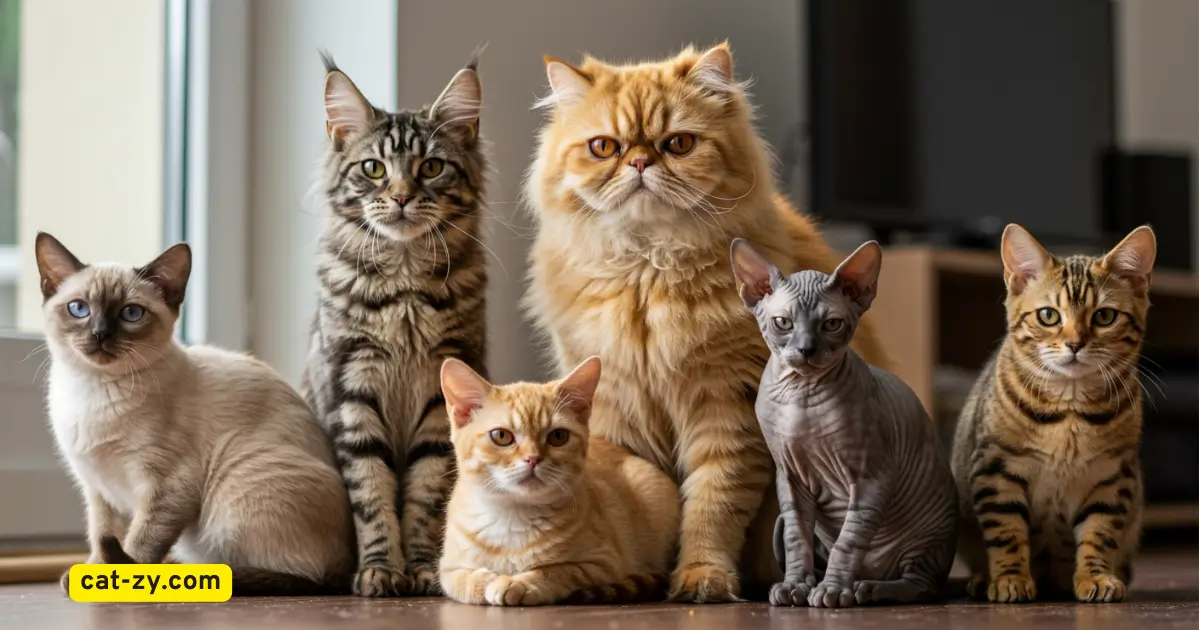
Many people think all tabby cats are the same breed. But tabby patterns can be found in many breeds. Tabby cats are not a breed, but a coat type found in various breeds.
Tabby Patterns vs. Cat Breeds: What’s the Difference?
Tabby patterns describe the coat’s look, while cat breeds are based on ancestry and physical traits. Understanding this difference shows why tabby cats can be in many breeds, like British Shorthairs and Maine Coons. Knowing about the types of tabby cats and their traits helps us appreciate their unique beauty.
Classic Tabby: The Bullseye Pattern
The classic tabby pattern is very well-known and loved. It’s famous for its bullseye markings. This pattern has a broad, swirling design on the sides and an M-shaped mark on the forehead.
Identifying Features
Classic tabbies have a striking coat pattern. Their sides show a unique bullseye pattern. They also have a mix of swirling patterns and special markings.
These cats have rich, vibrant coat colors. Their colors can range from brown to gray.
Popular Breeds
Many popular breeds show the classic tabby pattern. The British Shorthair is known for its sturdy build and short coat. The Maine Coon is famous for its large size and fluffy coat.
The American Shorthair also displays this pattern.
Personality Traits

Classic tabbies are often calm and affectionate. They are loyal companions and are generally easy-going.
Bringing a classic tabby into your family means getting aloving and gentle pet.
Mackerel Tabby: The Striped Beauty
The Mackerel Tabby is known for its stunning, striped look. It has narrow stripes on its legs, torso, and face. This makes it a beautiful sight to see.
Recognizing the Mackerel Tabby Pattern
To spot a Mackerel Tabby, look for distinctive narrow stripes. These stripes are usually more even than those in classic tabbies. The stripes can be continuous or broken, but they always make the cat look striking.
Breeds Commonly Displaying the Mackerel Pattern
Many cat breeds show the Mackerel Tabby pattern. The British Shorthair is one known for its strong build and short, dense fur. The Maine Coon, one of the biggest domestic cats, also sports this pattern. Domestic shorthairs often have it too, showing their popularity across breeds.
Interesting Facts About Mackerel Tabbies

Mackerel Tabbies are not just pretty; they’re also unique personalities. They are often described as energetic and playful. Their striped pattern comes from complex genetics, making their coats truly special.
Spotted Tabby: Nature’s Leopard
Spotted tabbies are truly captivating with their unique beauty. Their coats feature distinct spots, giving them a leopard-like look. This makes them both exotic and endearing.
Distinguishing Spotted Tabbies from Other Patterns
Spotted tabbies have clearly defined spots that vary in size and color. They differ from mackerel tabbies with stripes and classic tabbies with swirling patterns. Their spots are random yet evenly distributed.
Breeds Known for Their Spotted Tabby Coats
Several breeds show off the spotted tabby pattern. The Ocicat and the American Shorthair are among them. These breeds highlight the genetic diversity that creates their stunning coats.
The Allure of Spotted Tabby Cats
Spotted tabby cats are known for their unique appearance and vibrant personality. Their distinctive coats make them stand out. Their affectionate and playful nature makes them wonderful companions.
Ticked Tabby: The Agouti Marvel
The ticked tabby is known for its unique agouti hairs. This pattern is quite fascinating. It might not be the first thing you notice, but it’s definitely eye-catching.
Unique Characteristics

Ticked tabbies have agouti hairs with bands of color. This creates a “ticked” look, making their fur seem multi-dimensional. The ticking effect is more visible on the legs, face, and belly. Their coat pattern looks like salt-and-pepper or grizzled, depending on the base color.
Famous Breeds with Ticked Tabby Patterns
Many breeds show the ticked tabby pattern. The Abyssinian is a famous example, with its unique ticked coat. Other breeds, like the Somali and some Maine Coon variants, also have this pattern.
Why Ticked Tabbies Sometimes Go Unrecognized
Ticked tabbies can be missed because their pattern is subtle. The ticked effect might look like a solid coat at first. But when you look closer, you’ll see the beauty of their agouti hairs.
Conclusion: Embracing the Beauty of Tabby Patterns
Exploring the types of tabby cats shows their amazing variety. You’ve seen everything from classic bullseye patterns to striking mackerel stripes. Each pattern has its own charm, making tabby cats truly special.
Understanding these patterns can make your bond with your tabby cat even stronger. Whether you’re new to cat ownership or have been for years, tabby cats will always amaze you. When you understand the different types of tabby cats, looking at your cat’s coat reveals the amazing genetics behind their beauty. This can make your relationship with your cat even more special.
Admiring tabby patterns means celebrating each cat’s uniqueness. Their coats show nature’s endless creativity. As you learn more about your tabby cat’s special traits, you’ll find endless joy and companionship in their beauty.
FAQ
What are the main types of tabby cat patterns?
The main types are classic tabby, mackerel tabby, spotted tabby, and ticked tabby.
Are tabby cats a specific breed?
No, tabby cats are not a specific breed. The term tabby refers to the coat pattern. This pattern can be found in various breeds.
What is the genetic basis of tabby patterns?
Tabby patterns come from the interaction of multiple genes. These genes control the production and distribution of melanin. This results in the distinctive coat patterns
How can I identify a classic tabby cat?
Classic tabby cats have distinctive bullseye or M-shaped markings on their forehead. They also have a broad, swirling pattern on their sides.
What breeds commonly display the mackerel tabby pattern?
Breeds like the Maine Coon, British Shorthair, and Abyssinian often have the mackerel tabby pattern.
What makes ticked tabbies unique?
Ticked tabbies are unique because of their agouti hairs. These hairs create a distinctive ticked or banded effect on their coats.
Can tabby cats be found in different colors?
Yes, tabby cats come in many colors. These include brown, blue, silver, and red. They also have different shades and combinations.






3 Comments