
Raw Food for Cats: 5 Powerful Benefits You Need to Know

As a cat owner, you’re always looking for ways to make your pet healthier. One popular choice is a raw food diet. This diet includes uncooked meat, bones, and organs, just like their natural diet in the wild. Many believe it can greatly improve their health.
Many cat owners are now considering this alternative feeding method. They want to give their pets a more natural and possibly healthier diet. The idea is simple: feeding cats their natural prey gives them a diet full of nutrients that’s easier to digest.
This article will explore five compelling reasons to consider a raw diet for your cat. You’ll learn about better digestion and a shinier coat. These benefits are why more cat owners are choosing raw feeding for their pets.
Table of Contents
Understanding Raw Food for Cats
Cats are natural hunters, needing a diet rich in proteins and nutrients. In the wild, they eat meat, bones, and organs. This diet is full of enzymes, vitamins, and minerals, keeping them healthy.
The Natural Diet of Felines
Cats naturally eat raw meat, including muscle, organs, and bones. This diet is packed with proteins, vitamins, and minerals. For example, raw meat has taurine, important for the heart and eyes.
Organs and bones add variety and extra nutrients. They are key to keeping cats healthy.
Components of a Balanced Raw Diet
A balanced raw diet for cats should have different types of raw foods. This includes muscle meat for proteins, organs for vitamins, and bones for calcium. A diverse diet helps cats get all the nutrients they need.
Before starting a raw food diet, talk to a vet. They can make sure the diet is right for your cat. A raw diet can improve digestion, skin, and coat health. But introduce new foods slowly to avoid stomach problems.
What to Feed Your Cat on a Raw Diet: Types of Raw Food Explained
Many cat owners decide to explore raw food for cats but quickly hit the same wall: which meats are actually appropriate, and in what form? The term “raw food” covers a wide range of ingredients, and not all of them are created equal for your feline. Here’s a clear breakdown.
Types of Meat Suitable for Your Cat
Cats are obligate carnivores, meaning animal protein isn’t optional — it’s the foundation of everything they eat. When building a raw diet, variety across protein sources is key to covering the full spectrum of nutrients.
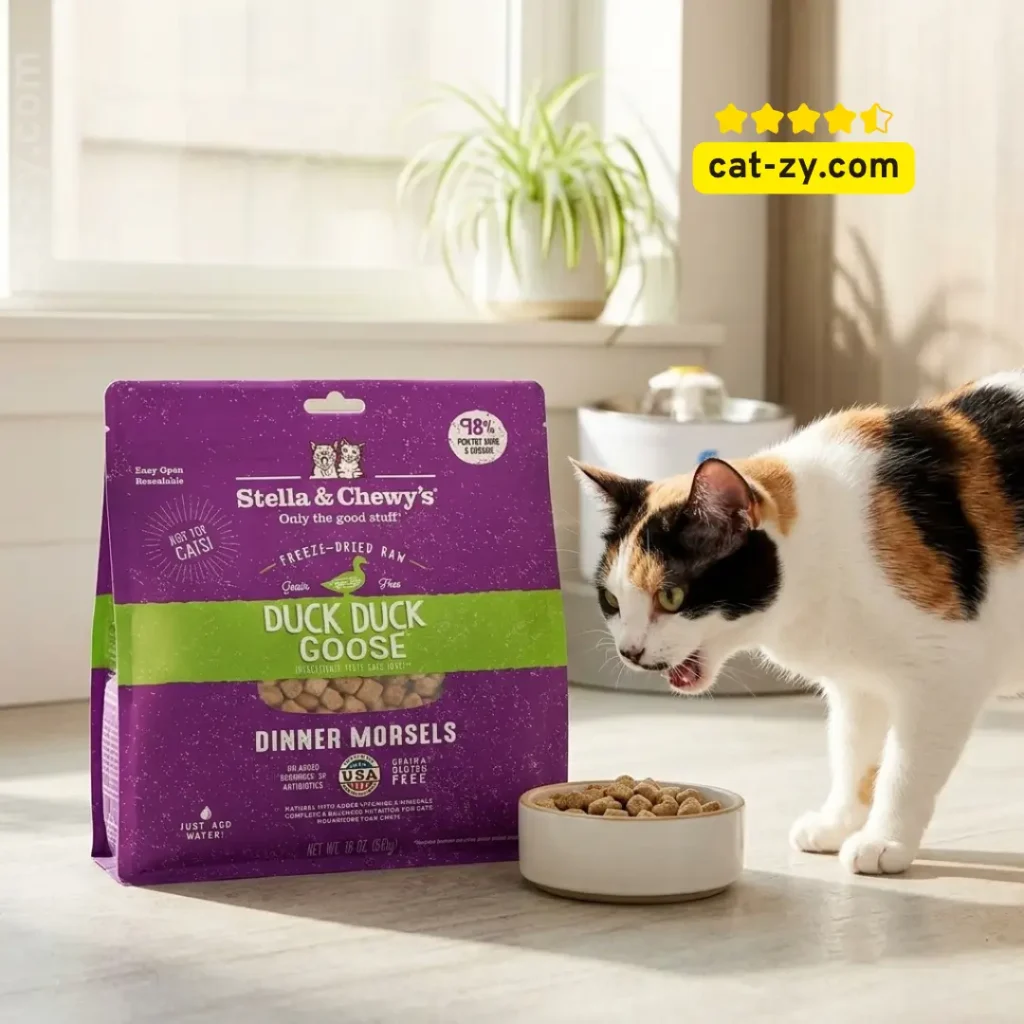
Poultry is the most common starting point. Chicken and turkey are widely used because they’re lean, digestible, and easy to source. Both muscle meat and organs from poultry are appropriate. Chicken necks and wings also serve a practical purpose: the soft, raw bones help naturally clean teeth during chewing. Always serve poultry raw and never cooked, as cooked bones splinter and become hazardous.
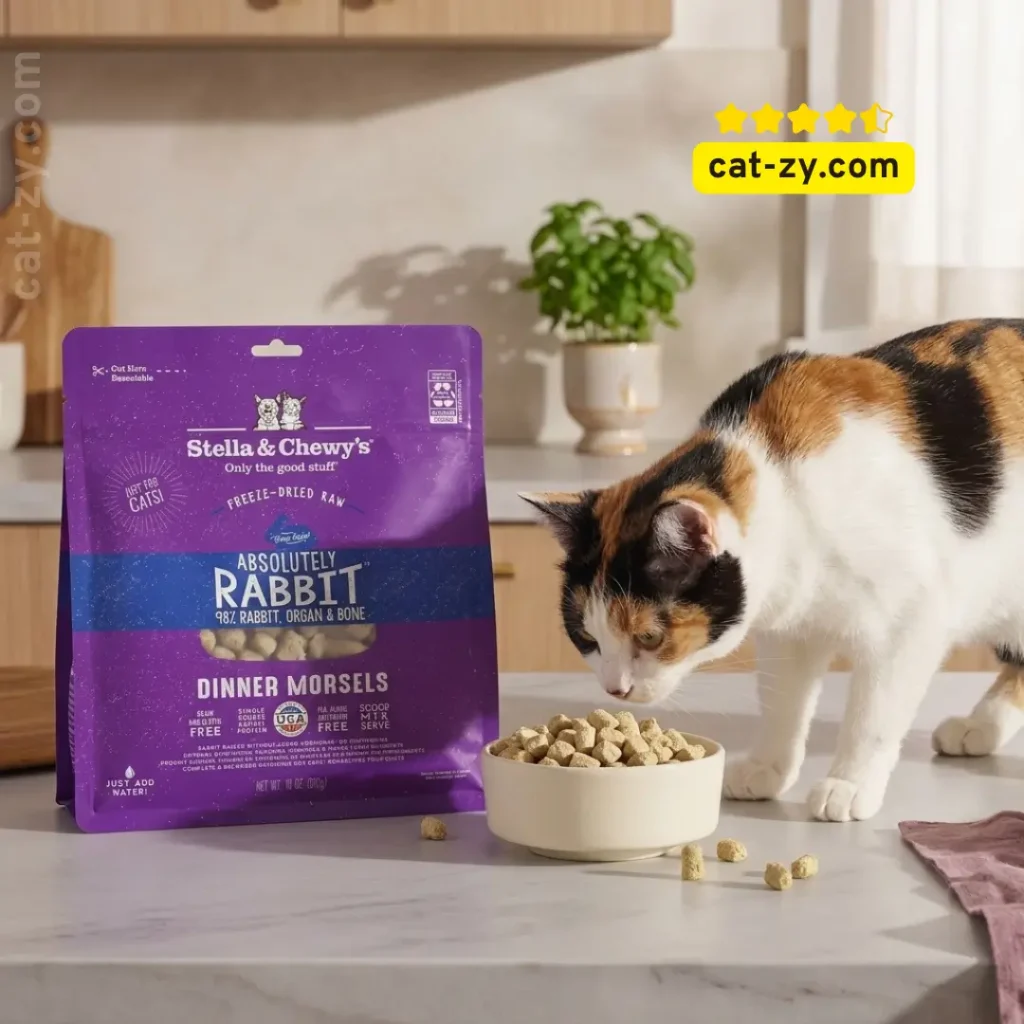
Rabbit is another excellent option and is actually one of the closest proteins to what cats would hunt in the wild. It’s lean, low in fat, and highly digestible, making it a good rotational protein for cats that tolerate it well.
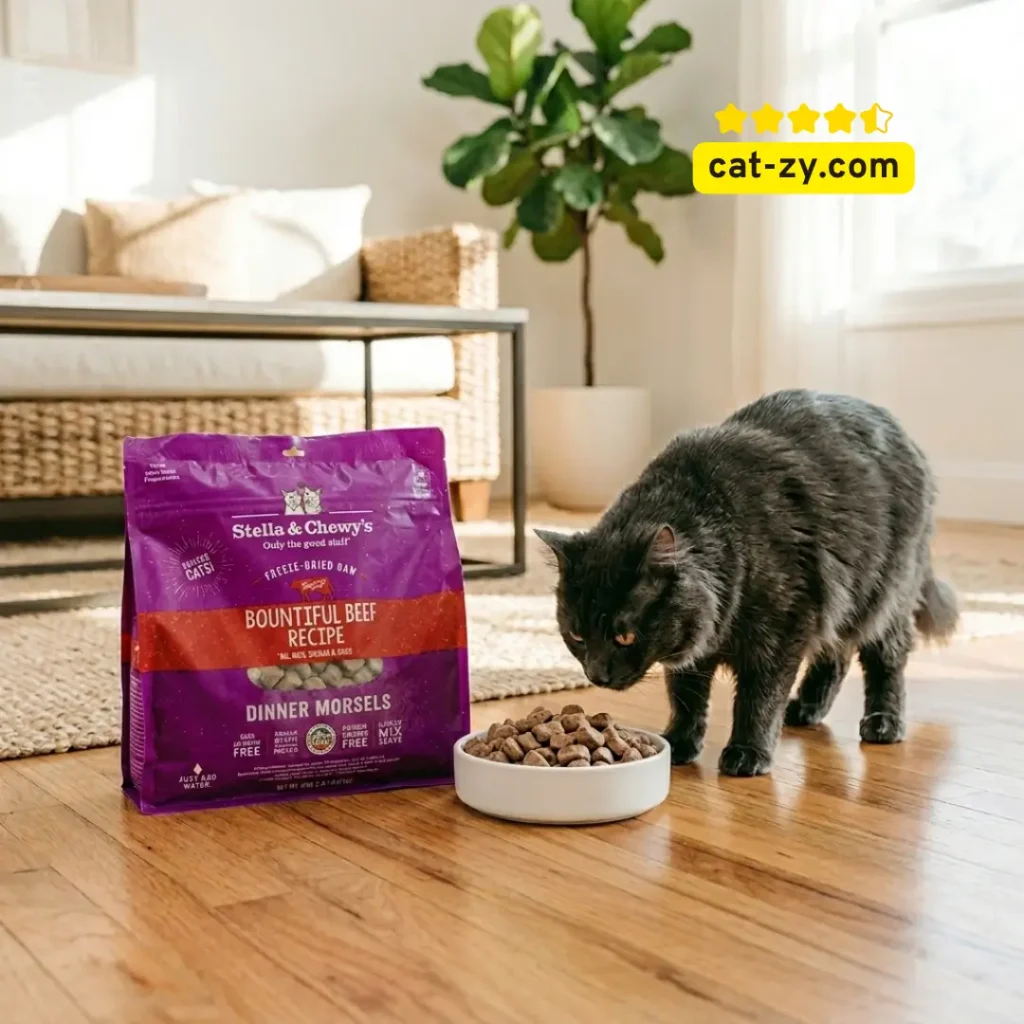
Red meats such as beef and lamb can be included in moderation. Beef is protein-dense and a good source of taurine — an amino acid cats cannot produce in sufficient quantities on their own. However, red meats tend to be richer, so they work better as part of a varied rotation rather than the sole protein source.
Organs deserve their own mention. The liver, kidneys, and heart are nutritional powerhouses — particularly the liver, which is rich in fat-soluble vitamins. That said, organ meat (especially liver) should make up a smaller portion of the overall diet, typically around 10–15%, to avoid overconsumption of certain nutrients.
Whole prey or ground raw are the two main formats. Whole prey (feeding a whole small animal or parts of one) mirrors what cats eat in nature. Ground raw is more practical for most pet owners and allows for controlled portioning and mixing of muscle meat, organs, and bone content.
Is Fish a Good Choice in a Raw Diet?
Fish often comes up in raw feeding conversations, and it can be included — but with more caution than other proteins.
Oily fish like sardines or mackerel are rich in omega-3 fatty acids, which support skin, coat, and joint health. Small amounts of these, a few times per week, can be a valuable addition to a raw rotation.
However, fish should not become the primary protein in a raw diet for a few reasons:
- One thing worth knowing about raw fish is that certain varieties naturally carry an enzyme that interferes with the body’s ability to absorb vitamin B1 — a nutrient cats genuinely depend on. Regular large quantities of raw fish can, over time, deplete this essential vitamin. Sardines and herring contain lower levels of thiaminase compared to options like carp or tuna.
- Tuna, while cats famously enjoy it, is best kept as an occasional treat rather than a staple. Between the heavy metal load some fish carry and the vitamin absorption issue, tuna is better treated as an occasional addition rather than something that shows up in the bowl regularly.
- Salmon should only be served if it has been previously frozen, as fresh raw salmon can carry a parasite that is harmful to cats.
The general guidance among raw feeders is to treat fish as a supplement or rotational protein — not the foundation of the diet.
Quick Reference: Raw Protein Options
| Protein | Frequency | Notes |
|---|---|---|
| Chicken / Turkey | Daily staple | Include soft raw bones |
| Rabbit | Regular rotation | Highly digestible |
| Beef / Lamb | Moderate | Rich; rotate with leaner proteins |
| Organ meat | 10–15% of diet | Liver in small amounts |
| Sardines / Mackerel | A few times per week | Good omega-3 source |
| Tuna | Occasional only | Not a staple |
| Salmon | Occasional | Must be previously frozen |
A well-rounded raw food approach for cats isn’t about finding one perfect protein — it’s about rotating across several to ensure nutritional completeness over time.
Commercial Raw vs. Homemade Raw Food for Cats
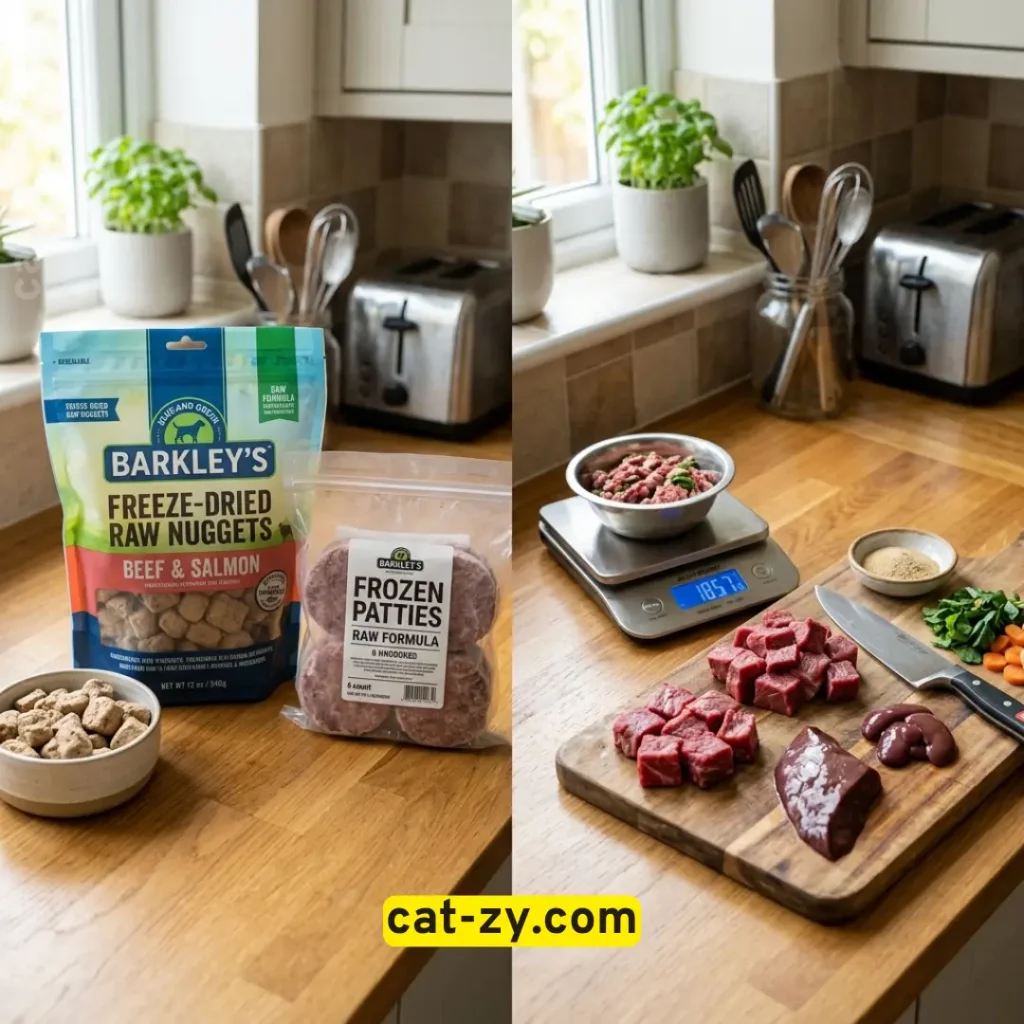
Once you decide to explore raw food for cats, a second question follows almost immediately: do you buy it ready-made, or prepare it yourself at home? Both paths lead to the same destination — a raw diet — but the experience of getting there looks very different.
Commercial Raw Cat Food
Commercial raw cat food comes in several formats: frozen patties, freeze-dried nuggets, and raw-coated kibble being the most common. Reputable brands formulate their products to meet established nutritional standards, which means the guesswork around balance is largely removed.
What works in its favor:
- Convenience is the clearest advantage. Portions are pre-measured, ingredients are pre-mixed, and storage is straightforward — freeze until needed, thaw, and serve.
- Nutritional consistency is built into the product. A well-formulated commercial raw diet includes the right ratio of muscle meat, organ meat, and bone content without requiring the owner to calculate anything.
- Safer handling in some respects — freeze-dried formats in particular reduce bacterial concerns while preserving the nutritional profile of raw ingredients.
Where it falls short:
- You have less visibility into the exact sourcing and quality of ingredients, which matters to some owners.
- Freeze-dried options, while convenient, tend to be more expensive per serving than frozen raw.
- Not all commercial raw products are created equal — some use fillers or lower-quality protein sources, so label reading still matters.
Homemade Raw Cat Food
Preparing raw food at home means sourcing ingredients yourself — typically a combination of muscle meat, organ meat, raw meaty bones (or a bone meal substitute), and sometimes additional supplements.
What works in its favor:
- Full ingredient control. You know exactly what goes into each meal — the cut of meat, where it came from, and what has been added.
- Flexibility to rotate proteins easily and adjust portions based on your cat’s preferences and weight.
- Potentially lower cost per meal when buying meat in bulk from a butcher or market, compared to premium commercial options.
Where it falls short:
- Nutritional balance is the biggest challenge. A homemade raw diet that isn’t carefully formulated can develop deficiencies over time — particularly in calcium, taurine, and certain vitamins. This isn’t a reason to avoid it, but it does require research and, ideally, guidance from a vet or feline nutritionist before starting.
- Time investment is real. Sourcing, preparing, portioning, and storing homemade raw meals takes consistent effort.
- Food safety handling falls entirely on you — proper hygiene, storage temperatures, and rotation of frozen batches are non-negotiable.
Which One Is Right for You?
Neither option is universally better. The right choice depends on your priorities:
| Commercial Raw | Homemade Raw | |
|---|---|---|
| Convenience | ✅ High | ❌ Time-intensive |
| Ingredient control | Moderate | ✅ Full control |
| Nutritional balance | ✅ Built-in | Requires planning |
| Cost | Higher per serving | Lower if buying in bulk |
| Flexibility | Limited by product range | ✅ Fully flexible |
A practical middle ground many owners land on: start with commercial raw to understand how their cat responds to a raw diet, then gradually introduce homemade components once they’re comfortable with the basics.
Whichever route you choose, the foundation stays the same — variety, quality protein sources, and attention to what goes into the bowl.
Benefit #1: Improved Dental Health
Feeding your cat raw food greatly improves their dental health. Raw food acts as a natural cleaner for their teeth, helping to prevent dental issues.
Cats eating raw meat follow a natural behavior seen in their wild ancestors. This behavior meets their instinctual needs and boosts their oral health.
How Chewing Raw Meat Cleans Teeth
Chewing raw meat, bones, and other raw foods naturally cleans your cat’s teeth. This action removes plaque and debris, lowering dental problem risks. Raw bones are especially good because they scrape away tartar and plaque.
Reduction in Tartar and Gum Disease
Eating raw food regularly can greatly reduce tartar buildup and gum disease. By mimicking wild cats’ diets, raw feeding promotes healthier gums and teeth. This leads to fresher breath, less dental pain, and better overall oral health for your cat.
Benefit #2: Enhanced Digestive Health
A raw food diet can greatly improve your cat’s digestive health. Cats are natural hunters, and their bodies are made to digest raw meat and bones. Eating a diet that matches their natural prey can really help their digestion.
Natural Enzymes and Digestibility
Raw food for cats has natural enzymes that help with digestion. These enzymes break down proteins and fats, making it easier for your cat to get the nutrients it needs. This leads to a more efficient digestive process for your cat.
Reduced Digestive Issues and Firmer Stools
Adding raw food to your cat’s diet can help with digestive problems like diarrhea or constipation. The balanced ingredients in raw food can make your cat’s stools firmer. This improves their overall health and energy, making raw food a great choice for their digestive health.
Benefit #3: Healthier Skin and Coat
A raw food diet can greatly benefit your cat’s skin and coat. It adds essential nutrients from raw ingredients. This improves your cat’s overall look and health.
Essential Fatty Acids in Raw Diets
Raw diets are full of essential fatty acids (EFAs). These are key to healthy skin and a shiny coat. EFAs like omega-3 and omega-6 help reduce inflammation and promote skin cell growth. Raw meats, fish, and organs are good sources of these nutrients.
Visible Improvements in Coat Quality and Reduced Shedding
Cats on a raw diet often have a shinier, healthier coat. They also shed less. This is because raw diets have balanced nutrients and no fillers or by-products. Your cat’s coat will look better and be healthier, needing less grooming and shedding less at home.
Benefit #4: Weight Management and Muscle Development
Keeping your cat at a healthy weight and building muscle is key. A raw food diet can help with this. It keeps your cat’s weight in check and helps build lean muscle.
Raw food is packed with protein. Protein is vital for muscle growth and keeping muscles strong. It also helps your cat feel full for longer.
Protein-Rich Diet Benefits
A diet full of protein, like raw meat, is good for muscles and body functions. Raw food diets are rich in protein. This is important for keeping muscles lean and supporting your cat’s metabolism.
Combating Feline Obesity Through Natural Nutrition
Feline obesity is a big problem. Raw food can help fight it. It gives your cat the nutrients they need to stay at a healthy weight. This natural way of managing weight lowers the risk of obesity-related health problems.
Adding raw food to your cat’s diet is a big step towards their health. It’s especially good for managing weight and building muscle.
Benefit #5: Increased Energy and Vitality
A raw food diet can greatly improve your cat’s energy and vitality. This leads to a more vibrant and healthy life. Cats fed a diet that mirrors their natural eating habits show more vigor and a greater willingness to play.
This boost in energy comes from the bioavailable nutrients in raw food. Unlike processed cat foods, raw food keeps its nutritional value. This gives your cat the fuel it needs for optimal health.
Bioavailable Nutrients and Their Impact
The nutrients in raw food are more easily absorbed by the body. This means your cat’s body can use these nutrients more efficiently. This leads to improved overall health and increased energy levels.
For example, raw meat has high-quality proteins and essential fatty acids. These are crucial for maintaining your cat’s physical health. They support muscle development, skin health, and coat condition, all contributing to your cat’s vitality.
Behavioral Changes and Quality of Life Improvements
As your cat’s energy levels increase, you may see big changes in their behavior. They may become more playful and interactive and show a renewed interest in their surroundings. This not only improves their quality of life but also strengthens the bond between you and your pet.
Moreover, a cat with increased vitality is likely to have a better overall quality of life. They will have improved physical health and a reduced risk of obesity and related health issues. By feeding your cat raw food, you’re not just improving their diet; you’re enhancing their entire way of life.
Conclusion: Is Raw Food Right for Your Cat?
Adding raw food to your cat’s diet can bring many health benefits. It can improve their dental health and boost their energy. Raw food helps reduce tartar and gum disease and improves digestion.
It also makes their skin and coat healthier, helps with weight management, and increases energy. Before switching to raw food, think about your cat’s needs and health. It’s important to talk to a vet to make the right choice.
Knowing the good and bad of raw food for cats helps you make a smart choice. This choice can greatly improve your cat’s health and happiness.
FAQ
What is raw food for cats, and how is it different from commercial cat food?
Raw food for cats is made from uncooked, natural ingredients like meat and bones. It’s different from commercial cat food, which often has preservatives and fillers. Raw food aims to match a cat’s natural diet from the wild.
Is raw food for cats safe, or can it contain bacteria like Salmonella or E. coli?
Raw meat can have bacteria like Salmonella or E. coli. But you can keep your cat safe by handling the food right and storing it well. Reputable suppliers also follow strict safety rules to lower the risk.
What’s the best way to switch my cat over to a raw food diet?
Start by mixing a little raw food with their usual diet. Slowly add more raw food over days or weeks. This helps avoid upset stomachs.
Can I make my own raw food for cats, or should I buy it pre-made?
You can make your own raw food, but it must be balanced and complete. Buying pre-made raw food is easier, as it’s made to meet a cat’s nutritional needs.
Will my cat’s stool quality change on a raw food diet?
Yes, switching to raw food often makes a cat’s stool firmer and less bulky. This is because raw food is easier to digest than commercial cat food.
How much does raw food for cats cost compared to commercial cat food?
Raw food prices vary based on brand, quality, and ingredients. Some raw foods might cost more than commercial cat food. But they could save money in the long run by improving health and reducing vet bills.
Can raw food for cats help with allergies or sensitivities?
Cats with allergies or sensitivities might find relief in a raw food diet. It avoids common allergens like grains and preservatives. Always talk to a vet to see if it’s right for your cat.





9 Comments