5 Heartwarming Reasons This Stray Cat Licks My Face Now

Have you ever wondered why your cat licks your face so often? This curious behavior can be both endearing and puzzling. As a cat owner, you might know your pet’s affectionate gestures. But have you ever wondered why your cat licks your face?
This affectionate act has several reasons, some of which might surprise you. Knowing these reasons can strengthen your bond with your pet. It also gives insight into their unique personality.
In this article, we’ll look at the five shocking reasons behind this behavior. This will help you better understand your feline friend’s actions.
Table of Contents
The Science Behind Why Your Cat Licks My Face
When your cat licks your face, it’s more than a funny habit. It shows their instincts. To get why they do this, we must look at the reasons and how it works.
The Evolutionary Background of Cat Grooming
Cats are very clean, thanks to their long history of grooming. It’s not just about being clean; it’s also a way to bond. In the wild, mother cats groom their kittens. This shows love and comfort.
The Unique Structure of a Cat’s Tongue
A cat’s tongue is special, with tiny spines called papillae that face backward. These spines are key for grooming.
Papillae: Nature’s Perfect Grooming Tool
The papillae on a cat’s tongue are made of keratin, like human hair and nails. When a cat licks, these papillae comb out loose hair and spread oils. This makes a cat’s tongue great for grooming, including their humans.
Understanding the science behind your cat’s licking reveals how complex their behavior is. It also highlights the strong bond they have with you.
How Cat Licking Behavior Evolves Across Different Life Stages
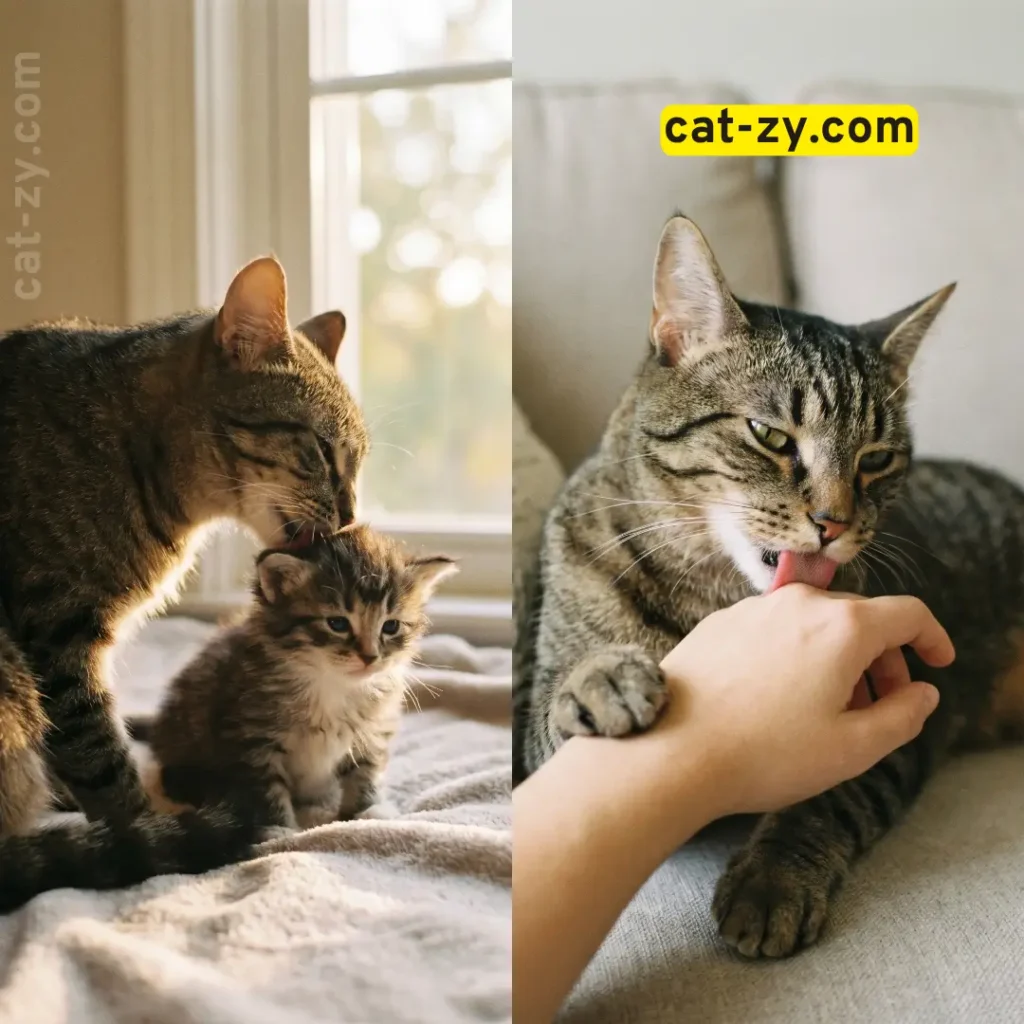
When asking yourself, “Why does my cat lick my face?” age is one of the most important factors to consider. Your kitten’s constant face-licking looks very different from an adult cat’s selective grooming—and both differ from senior cat behavior. Understanding how your cat’s age shapes their licking patterns helps you appreciate their unique way of expressing affection at each life stage.
Kittens: The Peak Licking Years (0-1 Year)
Kittens experience the most intense face-licking phase of their lives. Starting at birth, they learn grooming from their mother. By 4-6 weeks, kittens begin licking littermates and exploring their world through their mouths.
The real peak occurs between 2-8 months—a period when many kittens lick faces almost constantly. This behavior serves several purposes: they’re exploring textures and tastes, bonding with caregivers, and learning social hierarchies. When your kitten licks my face repeatedly, it’s normal developmental behavior combined with seeking comfort from maternal figures.
Around 8 weeks (typical adoption age), separated kittens often intensify face-licking toward their new owners, essentially replacing their mother with a human caregiver. This is completely natural and shows your kitten is bonding with you.
Adult Cats: Selective and Meaningful (1-7 Years)
As cats mature, face-licking becomes more intentional and less frequent. Adult cats don’t lick faces constantly as kittens do—instead, they choose specific moments and people. When an adult cat licks your face regularly, it’s a more deliberate expression of trust and affection than kitten licking.
Hormonal changes matter significantly. Cats typically undergo spay/neuter surgery around 5-6 months. Interestingly, many owners report their cats become more affectionate and more likely to lick faces after these procedures. This occurs because reproductive hormones decrease territorial marking behavior while increasing social bonding. Unspayed/neutered cats show different patterns—males engage more in territorial scent-marking (including via licking) during breeding seasons, while females may withdraw during estrus cycles.
Adult cats often develop consistent licking routines—perhaps greeting you in the morning or during evening cuddles. This predictability reflects established bonds and comfortable social patterns.
Senior Cats: Variable and Changing (11+ Years)
Senior cat behavior becomes highly variable. Some senior cats lick less frequently due to reduced mobility, energy levels, and sensory changes. Arthritis or other age-related conditions can make the stretching required for face-licking uncomfortable. Additionally, declining taste sensitivity means faces become less “interesting” to senior cats.
However, some senior cats actually lick more. This can indicate they’re seeking extra comfort from pain or anxiety, experiencing cognitive changes, or intensifying bonding in their remaining years. A senior cat’s increased face-licking often signals they need more emotional support.
Pay close attention to changes in senior cat behavior. A sudden increase or decrease in face-licking can signal stress, pain, or cognitive dysfunction—all worth discussing with your veterinarian.
The Overall Pattern Across Life Stages
Here’s what typically happens:
- Kittens (0-1 year): Very frequent licking, exploratory, and playful
- Young adults (1-3 years): High frequency but becoming selective
- Adults (3-7 years): Moderate, highly selective, purposeful
- Mature adults (7-11 years): Declining frequency for many, gentler in nature
- Seniors (11+ years): Highly variable—some increase, some decrease significantly
What About Individual Differences?
While age provides a general framework, individual cats vary tremendously. A senior cat might lick your face more than a young kitten. Several factors influence these variations:
- Breed tendencies (Siamese and Ragdolls tend toward more affection)
- Early socialization experiences
- Genetic predisposition
- Environmental stability and stress levels
- Owner’s responsiveness to the behavior
Practical Takeaway
When you ask, “Why does my cat lick my face?” remember that the answer changes with age. Constant kitten licking is exploratory and bonding—cherish this phase. Adult cat face-licking is more meaningful precisely because it’s selective. Senior cat changes—whether increased or decreased—deserve attention and may indicate important health information.
Rather than viewing behavioral changes as your cat becoming less affectionate, recognize that your cat’s way of expressing love evolves naturally. A senior cat’s occasional, intentional face-lick may represent a deeper bond than a kitten’s frequent licking.
By understanding how age shapes cat behavior, you can better appreciate your feline companion’s unique communication style at every life stage.
Reason #1: Your Cat Is Showing Deep Affection
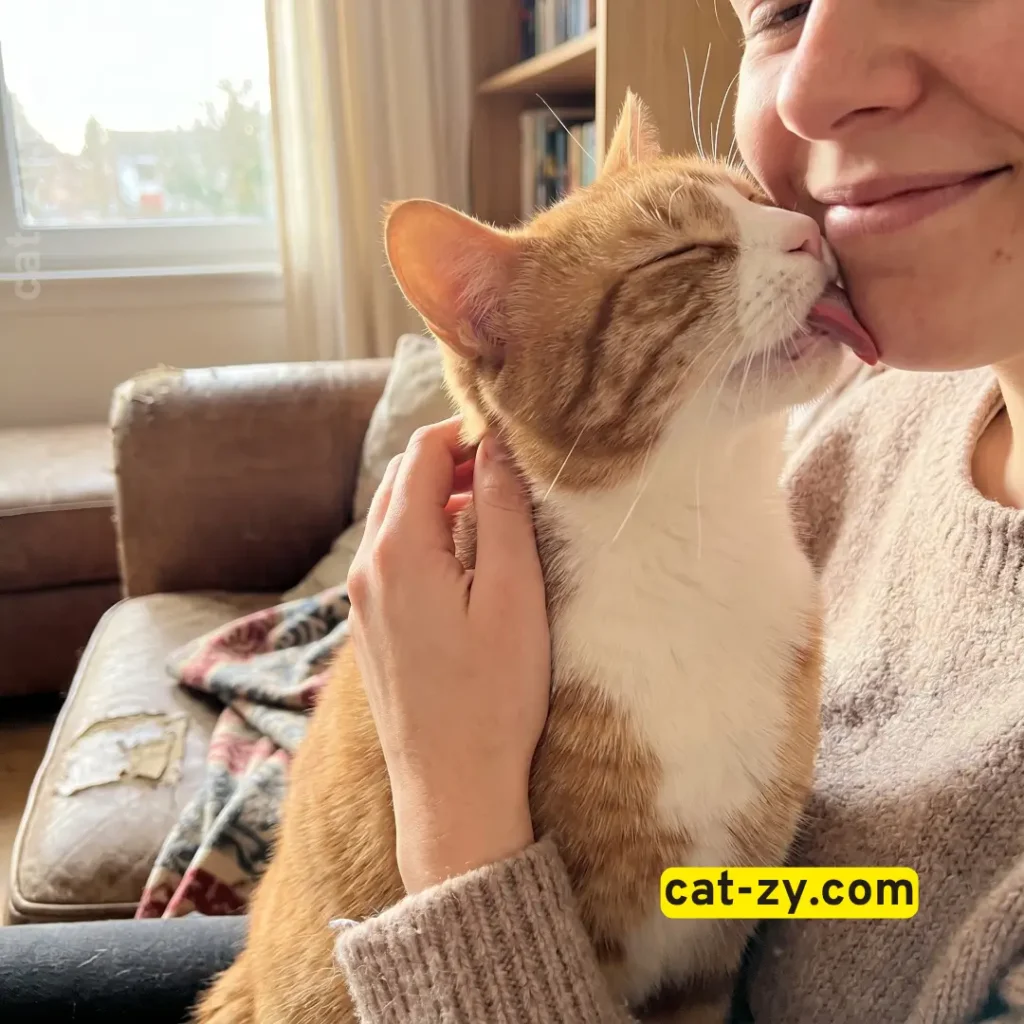
When your cat licks my face, it’s a sign of deep affection. This behavior comes from their early life experiences. It shows their emotional state, shaped by their mother and siblings. If your cat licks my face, it’s likely expressing love and trust.
The Connection Between Licking and Maternal Bonding
Licking is key in the feline world, starting at birth. Mother cats groom their kittens with licks. This helps their kittens grow and feel comforted.
This early bond teaches kittens that licking is a sign of love. It shows them how to show affection and comfort.
How Adult Cats Express Love Through Grooming
As cats grow up, they keep using licking to show love. When your cat licks your face, it’s showing you love and trust. It feels safe and comfortable with you.
This grooming behavior is a sign of trust and affection. Your cat sees you as part of its family.
The Oxytocin Release: The Love Hormone Connection
Licking makes your cat and you release oxytocin, the “love hormone.” Oxytocin makes us feel affectionate, relaxed, and bonded. This hormone strengthens your bond, making your time together special.
Reason #2: You Taste Surprisingly Appealing to Your Cat
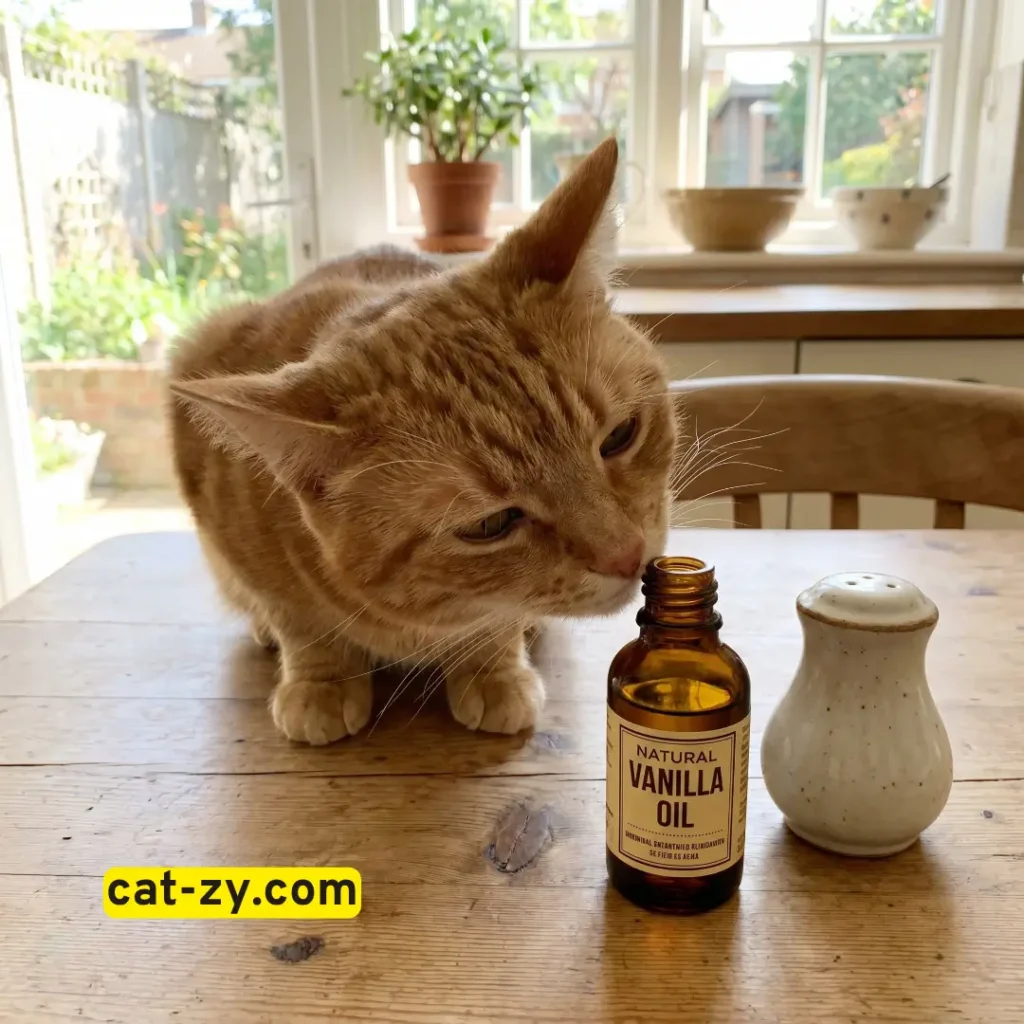
Sometimes, your cat licks my face because your skin tastes surprisingly appealing. The salt content and food residue can attract them. If your cat licks my face, it might be because of these irresistible tastes.
Why Your Skin’s Salt Content Attracts Cats
One reason cats can’t resist your face is the salt in your skin. They are naturally drawn to salty tastes. Human skin has salt, which is key in a cat’s diet. This attraction to salt might make them lick you more.
Food Residue and Cosmetic Products That Cats Find Irresistible
Food left on your skin can also attract your cat. If you’ve eaten something tasty and didn’t clean up, your cat might find it appealing. Certain cosmetic products can also make them curious, thanks to their interesting ingredients.
Common Ingredients That Trigger Licking Behavior
Ingredients like vanilla, oils, and fragrances in food and products can attract cats. If your skin has these, your cat might be drawn to it. Knowing about these ingredients can help you understand your cat’s actions.
Reason #3: Your Cat Is Marking You as Their Territory
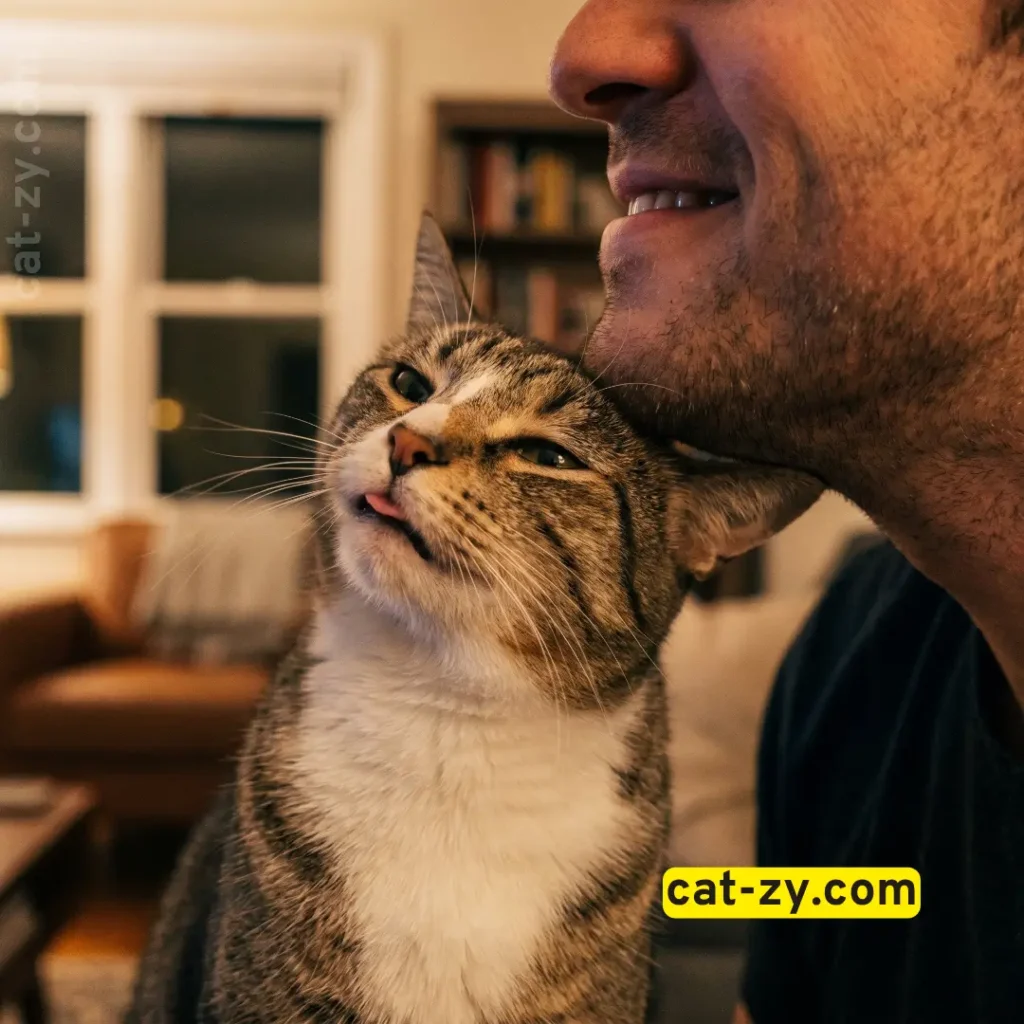
In some cases, when your cat licks my face, it’s a territorial gesture. Cats have scent glands, and this act is one way they mark you as part of their territory. If your cat licks my face, they could be marking you with their scent.
Understanding Feline Scent Marking Behavior
Cats naturally mark their territory by leaving their scent on things or people. They have scent glands on their faces, near their whiskers, and on their paws. When they lick you, they leave their scent on your skin, marking you as theirs.
How Licking Transfers Their Scent to You
Licking transfers your cat’s scent to you through their saliva. This saliva contains pheromones. These chemical signals tell others about your cat’s identity, status, and reproductive status. By leaving their scent on you, your cat tells others you belong to them.
Other Ways Cats Claim Ownership of Their Humans
Cats also claim ownership in other ways. They might rub their faces against you, knead on your lap, or even urinate on objects. These actions show their instinct to mark territory and feel secure and dominant.
Knowing these behaviors helps you understand how your cat communicates and interacts with its world.
Reason #4: Anxiety or Stress Could Be Behind the Behavior
It’s sweet when your cat licks my face. But sometimes, it means they’re feeling anxious or stressed. Cats often show behaviors that we don’t get right away. Excessive licking can be one of these signs.
To figure out if your cat’s face-licking is due to anxiety, first look for compulsive behaviors in cats.
Identifying Compulsive Behaviors in Cats
Cats with anxiety might groom too much, pace, or meow a lot. If your cat keeps licking your face, check if they do other odd behaviors too. This could help find the root of the problem.
Environmental Factors That Trigger Stress-Licking
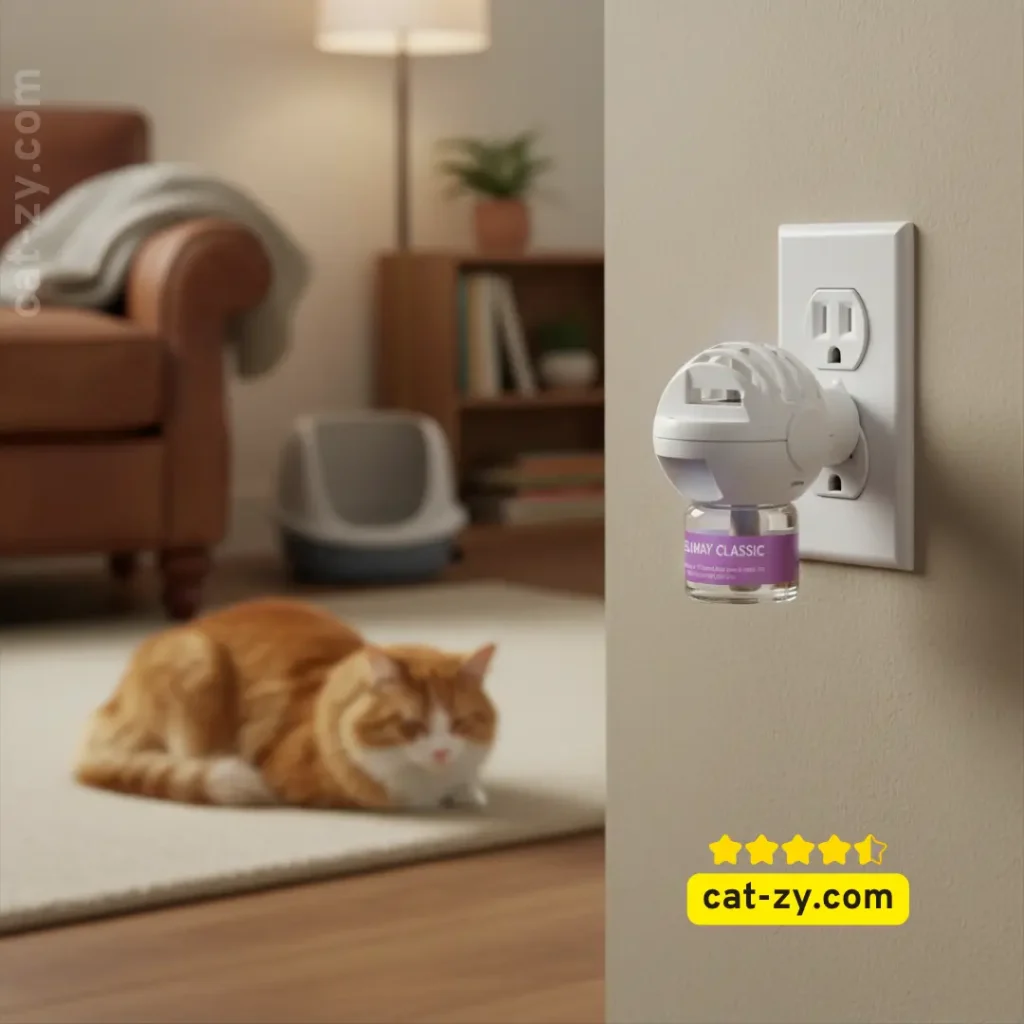
Many things can make cats stressed or anxious. This includes changes at home, new pets, or even rearranged furniture. Finding out what’s causing the stress is key. In many cases, using a calming cat pheromone diffuser can significantly reduce the anxiety that leads to this compulsive licking behavior.
Distinguishing Between Normal and Anxious Licking
Not all face-licking is because of anxiety. Sometimes, it’s just your cat showing love. But if the licking is too much or comes with other signs of worry, it might mean your cat is stressed.
Knowing why your cat acts a certain way can help you fix any problems. It also makes your bond with them stronger.
Reason #5: Your Cat Thinks You Need Grooming
When your cat licks my face, they may believe they need to groom you, just as they would another cat. This behavior helps strengthen the social bond. If your cat licks my face, it’s a sign of their natural grooming instincts.
Grooming Hierarchies in Feline Communities
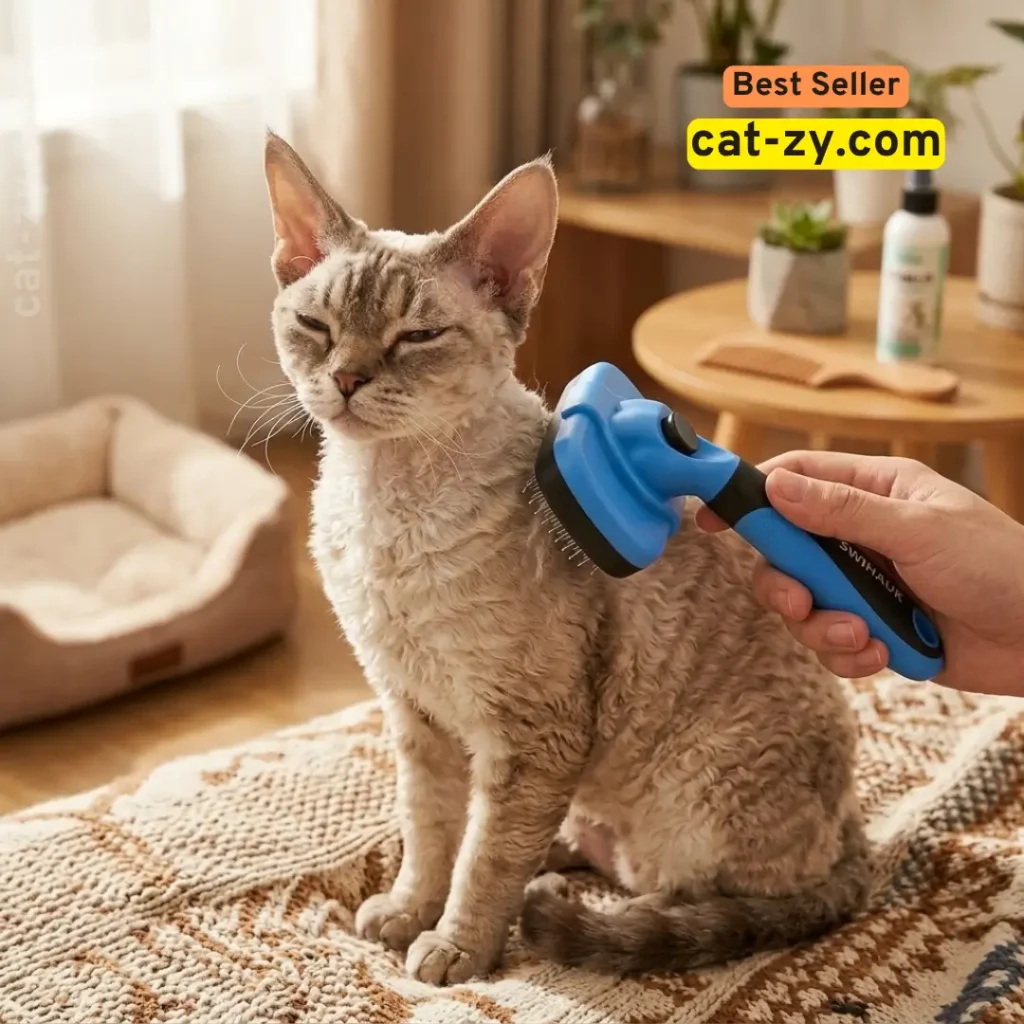
Grooming in cats is more than keeping clean. It’s a complex social act that sets up hierarchies and strengthens bonds. Dominant cats groom others to show love. You can reciprocate this bond and reduce the need for them to lick your face by using high-quality soft deshedding grooming brushes to mimic that maternal touch.
Why Cats Appoint Themselves as Personal Hygienists
When your cat licks your face, they might be grooming you. This doesn’t mean they think you’re dirty. They see you as part of their social group and show affection.
The Social Bonding Aspect of Mutual Grooming
Mutual grooming, or allogrooming, is key in cat social behavior. It helps cats bond and feel part of a community. When your cat grooms you, they’re welcoming you into their social circle, showing trust and love.
In summary, when your cat licks your face, it’s their way of showing you’re part of their social group. This is a sign of their natural grooming instincts and affection for you.
Health Implications When Your Cat Licks My Face
It’s sweet when your cat licks your face. But it’s important to think about the health risks. Cats groom themselves, and their saliva can carry germs.
Bacteria and Parasites in Cat Saliva
Cat saliva might have bacteria like Pasteurella multocida. This can lead to infections in people, especially if they have cuts. Also, cats can pass on parasites like Toxoplasma gondii through their saliva.
Allergic Reactions to Cat Saliva
Some people might be allergic to cat saliva proteins. If your cat licks your face, it could cause allergic reactions. These can range from mild skin issues to serious problems.
When to Consult a Veterinarian About Excessive Licking
If your cat licks your face too much, watch their behavior and health closely. See a vet if your cat seems stressed or anxious. Excessive licking might mean there’s a bigger issue.
Understanding Your Cat’s Behavior
Exploring why your cat licks your face reveals it’s more than a quirky habit. As a cat owner, knowing what drives your cat’s actions can strengthen your bond. It also improves your relationship.
Feline behavior is complex. Understanding why your cat licks your face offers insights into their emotional and social needs. It could be a sign of affection, a way to mark territory, or a sign of anxiety. Knowing this helps you meet their needs better.
By recognizing and valuing your cat’s unique personality and behavior, you can create a nurturing environment. This environment supports their well-being. Remember, every lick from your cat is a way of communicating. Understanding this language is crucial for a harmonious relationship.
FAQ
Why does my cat licks my face when I’m sleeping?
Your cat might lick your face when you’re sleeping because they feel safe and comfortable around you. They could also be trying to groom you, as they do with other cats.
Is it normal when a cat licks my face a lot?
Some face-licking is okay, but too much could mean your cat is stressed or anxious. Keep an eye on their behavior to figure out why.
Can I train my cat to stop licking my face?
You can try to stop your cat from licking your face by gently pushing them away or distracting them with a toy. But you need to be consistent and patient.
Are there any health risks associated with my cat licking my face?
Yes, there are health risks like bacteria and parasites from your cat’s saliva. So, it’s important to keep clean and watch your cat’s health.
Why does my cat licks my face after I’ve been eating?
Your cat might be drawn to the taste or smell of food on your skin. This can make them want to lick you.
Can my cat’s licking behavior be a sign of affection?
Yes, licking can be a way for your cat to show love and bond with you. It’s a natural behavior they do with their mothers and trusted cats.

One Comment