Why Do Acana Market Medley Indoor Cat Food Wins Big

Introduction: Unboxing Acana Market Medley for Indoor Cats
Acana Market Medley Indoor Cat Food keeps coming up in conversations with indoor cat owners, and for good reason. Do you ever stand in the pet food aisle wondering why every “indoor formula” seems to promise the same three things: less hair on your couch, a leaner cat, and a bowl your picky feline won’t ignore, yet so few of them actually deliver on all three at once?
If you’ve been chasing a protein-dense kibble that handles hairballs without piling on the pounds, Acana Market Medley Indoor Cat Food is one of the few formulas that genuinely tries to solve that puzzle. It leans on a mix of fresh regional meats and freeze-dried raw morsels rather than the corn-and-by-product fillers that dominate a lot of the indoor category.
That said, “premium” doesn’t automatically mean “right for your cat.” Before selecting the right kibble for an indoor lifestyle, it helps to actually understand what’s in the bag of Acana Market Medley Indoor Cat Food, how it stacks up against the food your cat may already eat, and whether the price tag is justified by anything beyond marketing language. That’s what this review of Acana Market Medley Indoor Cat Food sets out to do.
Table of Contents
What Is Acana Market Medley Indoor Cat Food?
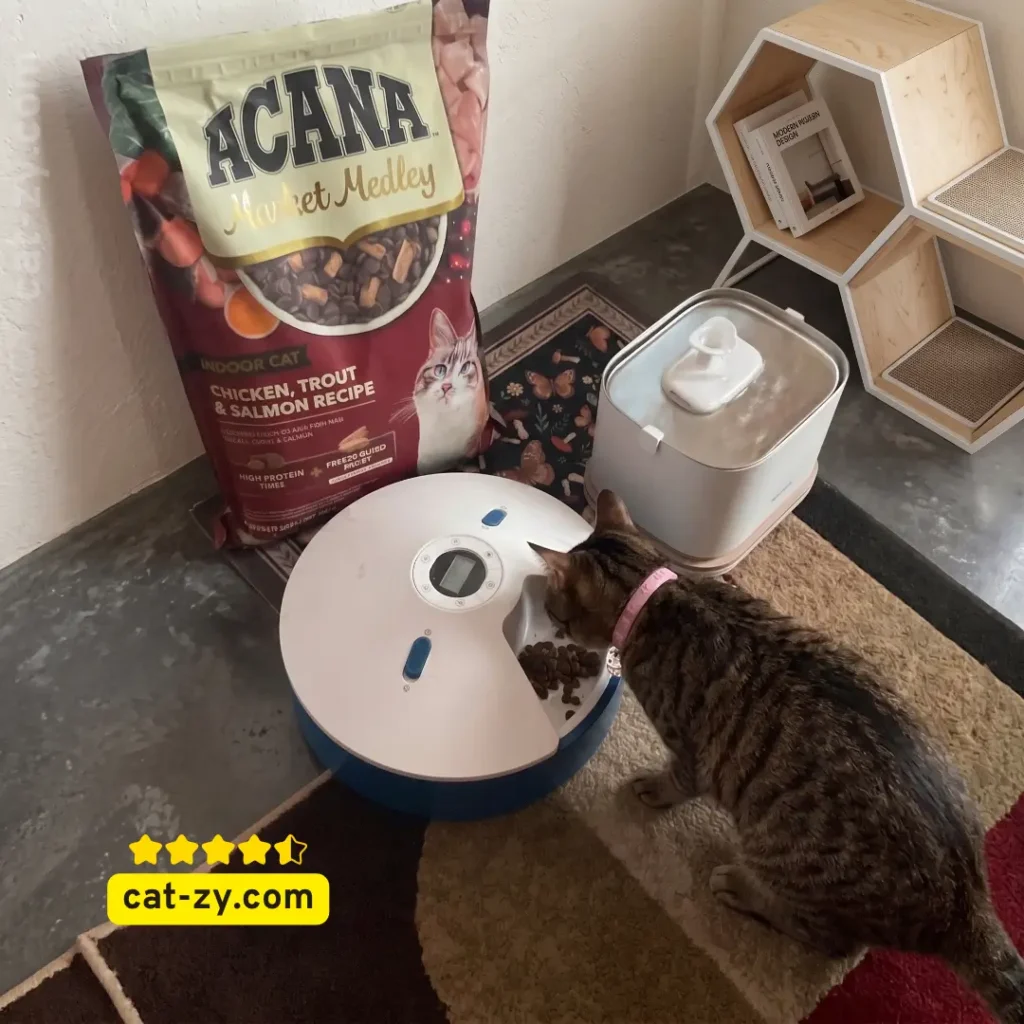
Acana Market Medley Indoor Cat Food sits under Champion Petfoods’ Acana line, positioned specifically for cats who spend their lives indoors and therefore burn fewer calories than an outdoor or working cat. The formula is built around fresh and raw animal ingredients, blended with fruits and vegetables meant to echo what Champion calls a “biologically appropriate” diet, and finished with a topping of freeze-dried morsels that are meant to boost palatability without relying on artificial flavoring.
Key Recipe Variants: Chicken, Trout & Salmon vs. Duck, Chicken & Turkey
Acana Market Medley Indoor Cat Food typically includes protein-forward variations, most commonly a poultry-and-fish blend built around chicken, trout, and salmon, and a poultry-focused blend built around duck, chicken, and turkey.
The recipe delivers concentrated omega-3 fatty acids (0.9%) sourced from trout, salmon, pollock meal, herring meal, and fish oil. This rich marine profile actively combats dry skin and supports a healthy coat, which matters a lot for indoor cats prone to dry, flaky skin from climate-controlled air.
The poultry-based recipe tends to appeal more to cats who are picky about “fishy” smells but still benefits from the same overall protein density and a high-fiber blend (up to 15% dietary fiber using miscanthus grass and pea fiber) specifically formulated for hairball control in indoor cats.
Important Label Verification Note
Always cross-check the printed ingredient panel on your specific physical bag before opening it. Champion Petfoods occasionally rotates production batches and protein sources between regional runs. If your indoor cat relies on specific ingredient exclusions, reviewing the current bag label guarantees complete transparency.
Beyond hairball control, the formula actively supports digestive health by incorporating guaranteed live probiotics (Lactobacillus acidophilus and Bifidobacterium animalis) to maintain balanced gut flora.
If your cat has a known sensitivity to a specific protein, checking the exact recipe on the bag matters more than the marketing name. Champion rotates ingredient ratios between production runs, so always cross-check the ingredient panel on your specific bag against what’s listed here.
The Freeze-Dried Difference: Raw Taste Meets Convenience
The freeze-dried morsels are the signature feature separating Acana Market Medley Indoor Cat Food from a standard kibble-only bag. These raw freeze-dried morsels feature a chicken and cranberry blend (along with freeze-dried cod and chicken liver). This combination preserves natural meat aromas to boost palatability while cranberry supports urinary tract health—a major benefit for indoor cats while keeping the shelf stability of dry food. For indoor cats, whose sense of smell drives appetite more than taste alone, this can make a real difference in acceptance, especially with cats transitioning off wet food or a picky eater who’s grown bored of plain kibble.
Quick Feeding Tip: Palatability Boost
If your indoor cat hesitates to eat plain dry kibble, do not throw the bag away. Pick out 2 or 3 of the raw freeze-dried chicken and cranberry morsels from the top of the bag and crush them into a fine powder directly over the bowl. The intense natural meat aroma acts as an instant olfactory topper that encourages immediate feeding.
Deep-Dive Ingredient Analysis: What’s Really Inside the Bag?
First 5 Ingredients Evaluated: Real Meat vs. Fillers
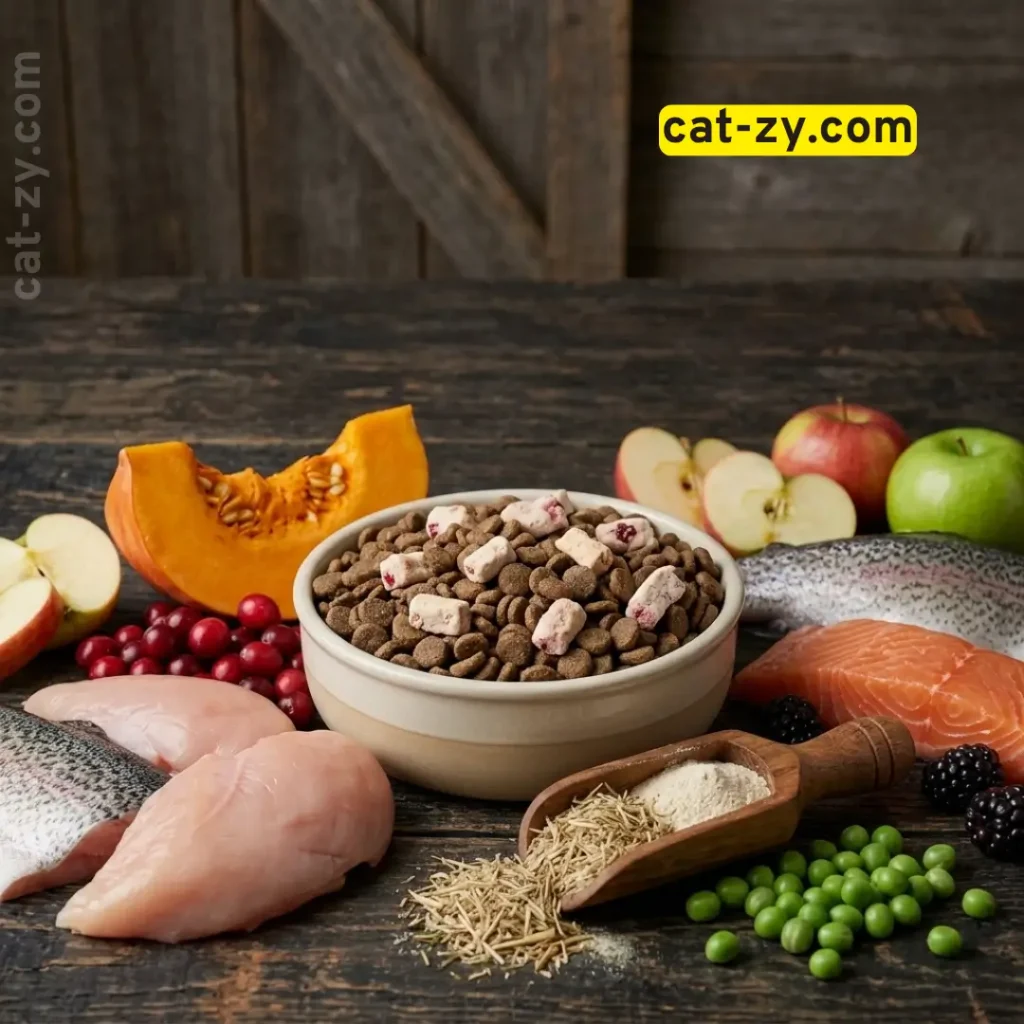
Acana Market Medley Indoor Cat Food sets an exceptional standard by filling its top five ingredients with named animal proteins: chicken, trout, salmon, chicken meal, and pollock meal. Meat meals (like chicken and pollock meal) are highly valuable here—they are concentrated protein sources with moisture removed, delivering more actual protein per gram than fresh meat alone. Having a combination of fresh fish and poultry alongside named meals at the very top ensures dense animal protein without relying on generic “meat by-products” or plant fillers.
The Grain-Free Debate: Is It Necessary for Indoor Cats?
Cats are obligate carnivores, and unlike dogs, they don’t have a strong physiological need for grain in their diet. That doesn’t mean grain-free is automatically superior; cats can digest moderate amounts of cooked grain without issue, and grain-free formulas sometimes substitute in higher levels of legumes like peas or lentils to bind the kibble, which has its own set of considerations. If you want to go deeper on this specific debate, our breakdowns on 7 Hidden Heart Dangers of Grain Free Cat Food and Should Cats Eat Grain Free? cover the DCM-related concerns that have come up around certain grain-free formulations in recent years.
For most healthy indoor cats without a diagnosed grain allergy, grain-free isn’t a requirement; it’s a preference. Where it becomes genuinely useful is with cats who show signs of a grain sensitivity, in which case pairing this kind of review with something like our guide to Hypoallergenic Cat Food can help you figure out whether a novel-protein or limited-ingredient diet might serve your cat better than a standard grain-free formula.
Fiber, Hairball Control, and Weight Management Metrics
Hairball control in kibble usually comes down to two things: fiber content that helps hair pass through the digestive tract, and calorie density that’s appropriate for a sedentary lifestyle. Indoor formulas typically dial back fat content slightly compared to an “all life stages” recipe, and they lean on a specialized fiber blend—specifically ground miscanthus grass, pea fiber, whole pumpkin, and apples providing up to 15% dietary fiber to assist hairball passage and maintain optimal stool quality actively.
According to general feline nutrition guidance from organizations like the World Small Animal Veterinary Association (WSAVA), an indoor cat’s caloric needs can run 20-30% lower than an active outdoor cat of the same weight, which is exactly why portion control on a calorie-dense kibble like this one matters more than the bag’s feeding chart alone.
Ingredient Breakdown Table for Acana Market Medley Indoor Cat Food
| Ingredient | Source Type | Nutritional Benefit for Indoor Cats |
|---|---|---|
| Deboned chicken | Fresh animal protein | High-quality amino acids, supports lean muscle |
| Chicken meal | Concentrated animal protein | Dense protein source without excess water weight |
| Trout/salmon | Fresh fish protein | Omega-3 fatty acids for skin, coat, and joint support |
| Freeze-dried morsels | Raw animal protein | Palatability booster, mimics raw-fed aroma and taste |
| Pumpkin / whole vegetables | Plant fiber | Supports hairball passage and digestive regularity |
| Peas/lentils (grain-free formulas) | Plant carbohydrate/fiber | Binds kibble, adds fiber, alternative to grain |
| Probiotics (fermentation product) | Live culture supplement | Supports gut flora balance and digestion |
Note: exact percentages and guaranteed analysis figures vary by production batch. Always confirm the guaranteed analysis panel on your specific bag rather than relying on general averages.
Acana Market Medley vs. Leading Indoor Competitors
Acana vs. Purina Cat Chow Indoor: Premium Protein vs. Budget Staple
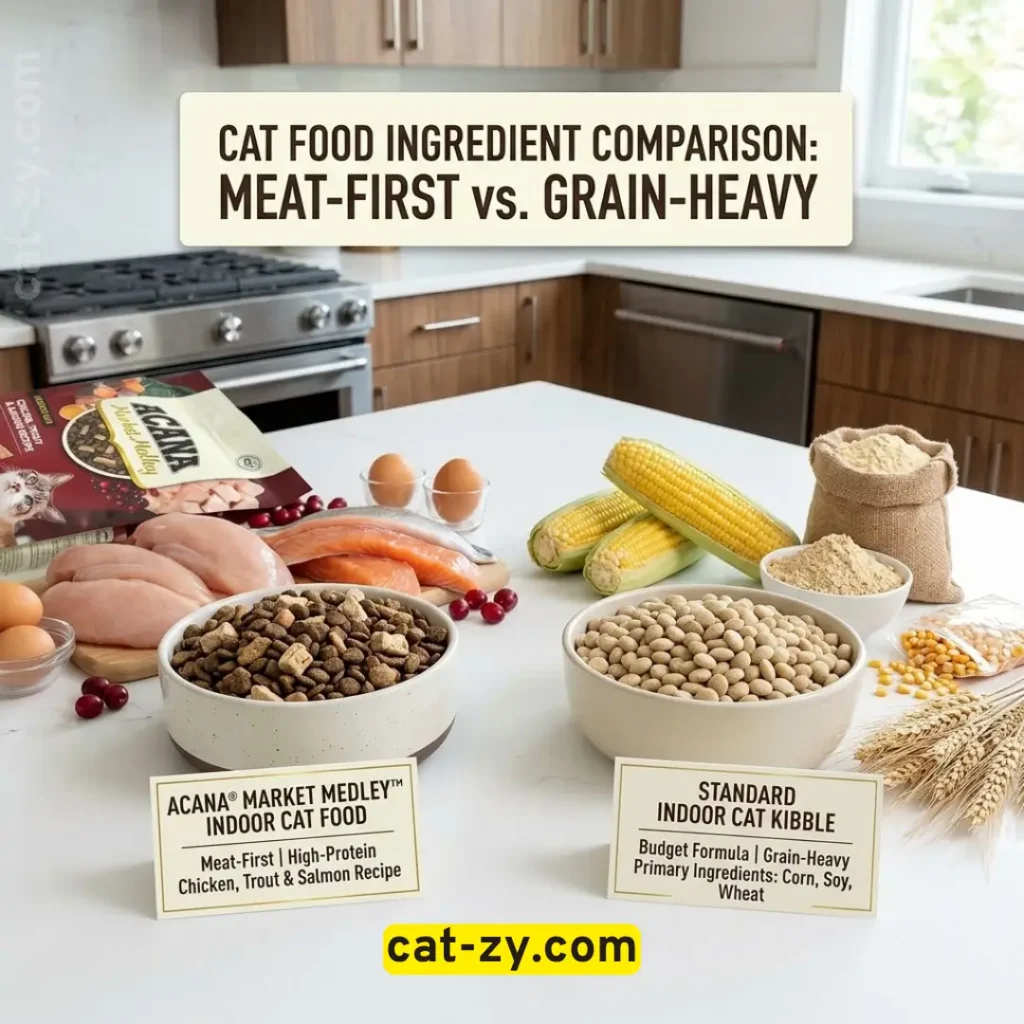
This comparison usually comes down to priorities. Purina Cat Chow Indoor Dry Cat Food is a budget-friendly staple that’s widely available and generally well-tolerated. Still, it relies more heavily on corn and grain-based ingredients, with animal by-product meal listed before named fresh meat on the label. Acana Market Medley Indoor Cat Food costs more per bag. Still, the ingredient sourcing is more transparent, and the protein content tends to come more directly from named animal sources rather than a blend of plant and by-product proteins.
While Purina Cat Chow Indoor is a widely available budget option, the label shows it relies heavily on corn, soy flour, wheat, and chicken by-product meal, alongside artificial colorings like Red 40 and Yellow 5. Nutrition-wise, it provides 30% crude protein and 4.7% crude fiber. By comparison, Acana Market Medley delivers a significantly higher protein density (38%) sourced entirely from real meat meals and fresh fish in its top 5 ingredients, plus a maximum of 15% dietary fiber for far superior hairball control—all without artificial dyes.
Acana vs. Fromm: Recipe Complexity and Digestibility
Fromm Healthy Weight Gold takes a different approach: family-owned production, a balanced combination of real chicken, duck, and barley, and a formula enriched with four active probiotic strains. At 30% crude protein and 11% fat, Fromm’s recipe tends to be gentler on sensitive digestive systems, making it a great option for cats needing a steady weight-management diet or those transitioning off traditional grain-inclusive foods.
Acana Market Medley Indoor Cat Food, by comparison, leans much harder into the “biologically appropriate” high-protein philosophy with 38% crude protein, 15% dietary fiber, and raw freeze-dried morsels. While Acana delivers superior protein density and hairball control, cats with sensitive stomachs may need a slower, more gradual transition to tolerate its rich protein profile well. Neither is objectively “better”; the right pick depends on whether your cat requires maximum protein density or a lighter, slow-crafted weight-control formula.
Side-by-Side Nutritional Breakdown: Acana vs. Top Indoor Formulas
| Feature / Metric | Acana Market Medley | Fromm Healthy Weight | Purina Cat Chow Indoor |
|---|---|---|---|
| Top Ingredient Source | Real Chicken, Trout & Salmon | Real Chicken & Chicken Meal | Chicken By-Product Meal & Corn |
| Crude Protein (Min) | 38% | 30% | 30% |
| Crude Fiber (Max) | 15% (Dietary) | 6% | 4.7% |
| Freeze-Dried Morsels? | Yes (Chicken & Cranberry) | No | No |
| Probiotics Included? | Yes (L. acidophilus, etc.) | Yes (4 Active Strains) | No |
| Artificial Colors/Dyes? | None | None | Red 40, Blue 2, Yellow 5 |
Acana Indoor Lineup Comparison: Acana Market Medley Indoor Cat Food vs. Other Acana Indoor Recipes
Acana Market Medley vs. ACANA Indoor Entrée Free-Run Poultry Recipe
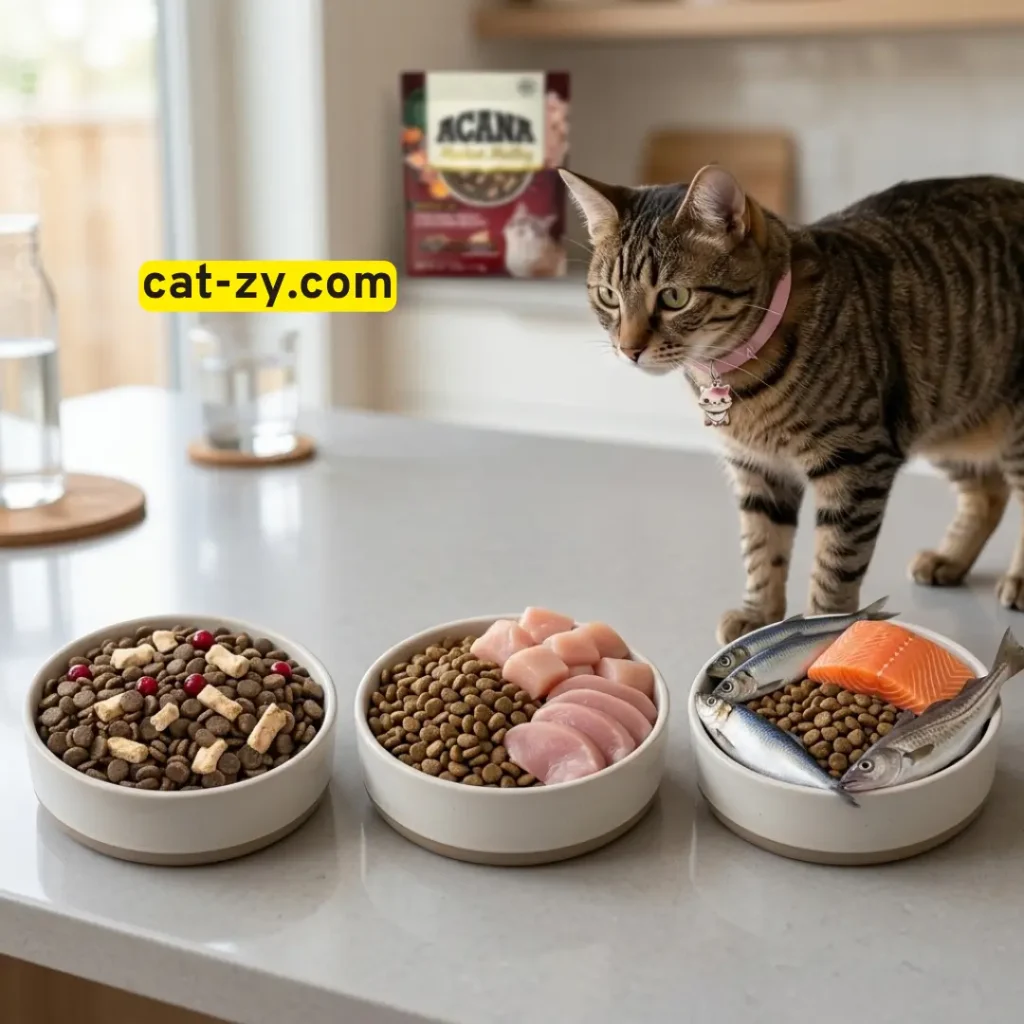
The Indoor Entrée Free-Run Poultry Recipe focuses on a single dominant protein family (poultry) with a simpler ingredient deck, which can make it easier on cats who do best with fewer novel ingredients. Acana Market Medley Indoor Cat Food, by contrast, brings in the freeze-dried morsel component and a broader ingredient spread, which adds palatability appeal but also means slightly more ingredient complexity for cats who need a simplified diet.
Acana Market Medley vs. ACANA Indoor Entrée Fish Recipe
The Fish Recipe pushes omega-3 content higher by concentrating on fish proteins throughout, rather than blending fish with poultry the way the trout-and-salmon variant of Acana Market Medley Indoor Cat Food does. If coat and skin support is your main concern and your cat tolerates fish-forward diets well, the dedicated Fish Recipe may edge out Acana Market Medley Indoor Cat Food on omega-3 density specifically, though Market Medley still delivers a meaningful amount through its fish-inclusive variant.
Acana Market Medley vs. ACANA Highest Protein Indoor Recipe (Grain-Free)
This is the most protein-dense option in Acana’s indoor range, formulated for cats that need maximum lean muscle support, often recommended for very active indoor cats or those recovering from weight loss under veterinary guidance. Acana Market Medley Indoor Cat Food sits a notch below it in protein density, offering a more moderate, everyday-appropriate balance rather than the higher-intensity protein load of the Highest Protein formula. If your cat is simply a typical indoor adult without extreme protein needs, Acana Market Medley Indoor Cat Food is likely the more sustainable long-term choice.
Daily Feeding Guide, Portioning, and Cost Realities
Translating Calories into Grams: How Much Should You Feed?
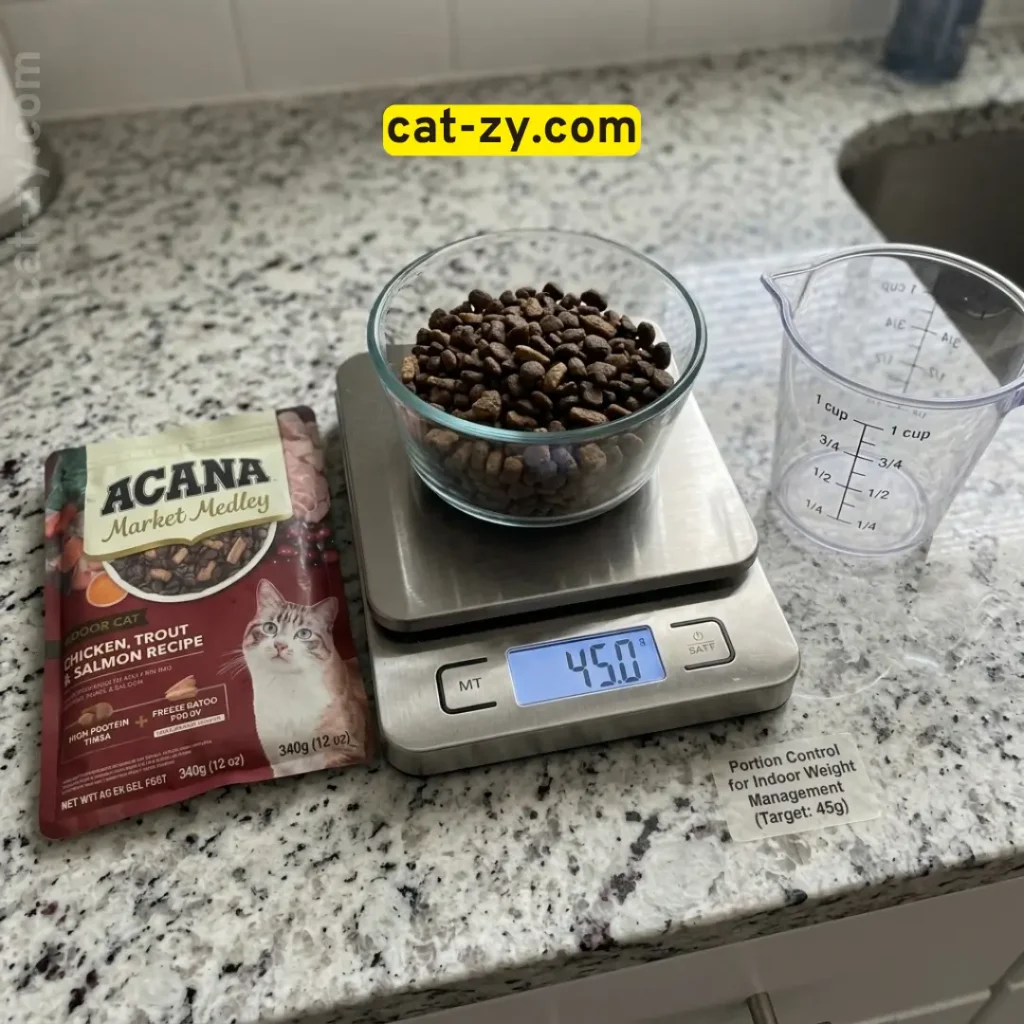
The feeding chart printed on the bag is a starting point, not a rule. It’s built around average-activity cats at a given weight, and indoor cats routinely need less than the chart suggests, sometimes 10-20% less, depending on age, spay/neuter status, and how much they actually move during the day. Since Acana specifies that 1 standard measuring cup (8 oz) equals 114 grams (delivering 428 kcal), weighing out portions in grams using a digital kitchen scale provides far greater precision than volume-based scooping, especially given how kibble density varies across recipes.
Managing Portions for Indoor Cats to Prevent Obesity
Obesity is arguably the single biggest health risk for indoor cats, more so than most kibble-related concerns. A protein-dense food like Acana Market Medley Indoor Cat Food can actually help here, since higher protein tends to support satiety and lean mass retention better than a carb-heavy filler diet, but only if portions are actually measured rather than free-fed. If you want a more precise, personalized read on how many grams your specific cat should be eating daily based on weight, age, and activity level, our Cat Feeding Calculator walks through that calculation step by step rather than relying on the generic chart on the bag.
Wet vs. Dry: Should You Mix Acana Market Medley Indoor Cat Food with Wet Food?
Hydration Benefits of Combining Kibble with Canned Recipes
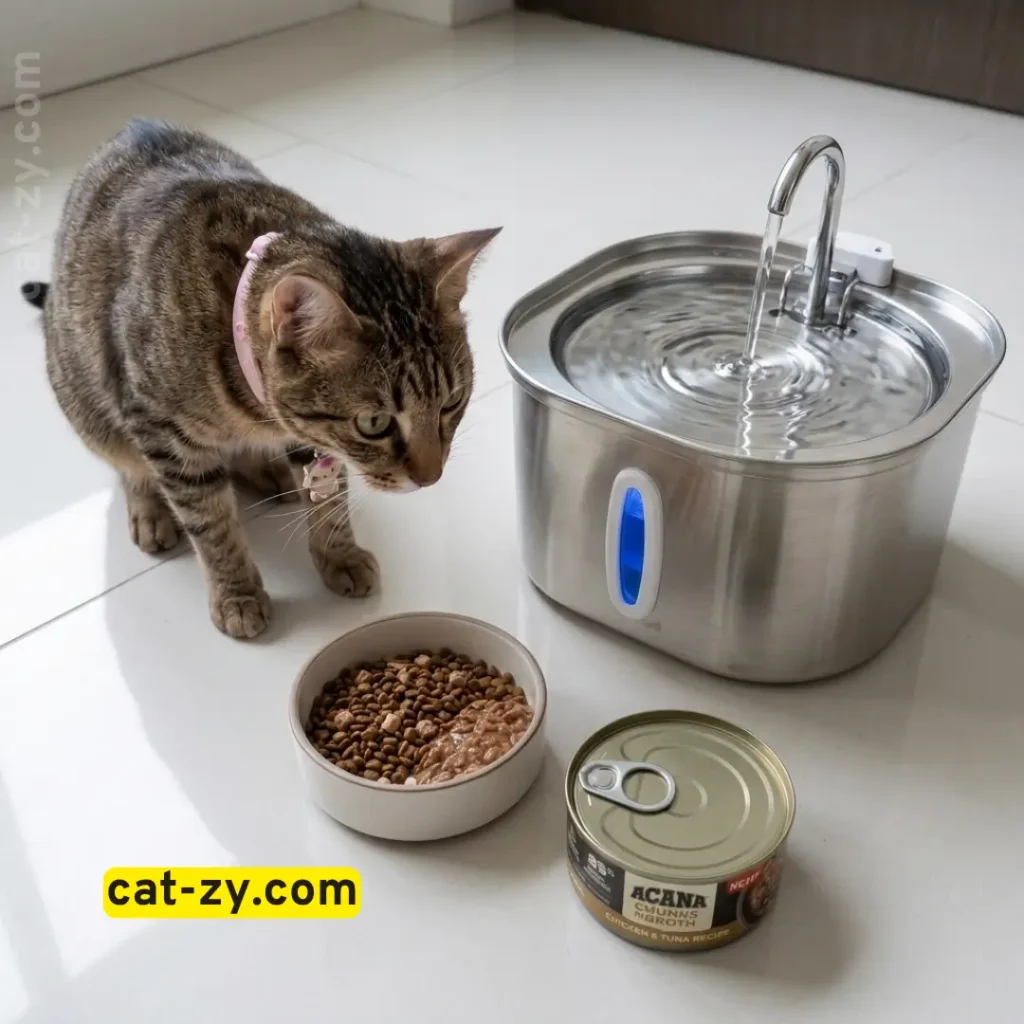
Cats evolved from desert-dwelling ancestors and generally have a low natural thirst drive, which means cats fed an exclusively dry diet often under-consume water relative to what their body actually needs. Mixing in wet food, whether that’s Acana’s own wet cat food lineup or another canned option, adds meaningful moisture intake without requiring your cat to drink more from the water bowl, which many cats simply won’t do reliably on their own.
Recommended Golden Ratio Table
Recommended Mixed Feeding Ratios (Kibble + Wet Food)
| Feeding Goal | Dry Kibble Ratio | Wet Food Ratio | Best For |
|---|---|---|---|
| General hydration support | 70% | 30% | Healthy adult indoor cats with low water intake |
| Urinary health priority | 50% | 50% | Cats prone to urinary crystals or past UTIs |
| Weight management focus | 80% | 20% | Cats needing calorie control with some moisture boost |
| Picky eater transition | 60% | 40% | Cats resistant to dry-only diets |
These ratios are general starting points. Cats with a diagnosed urinary or kidney condition should have their wet-to-dry ratio guided by a veterinarian rather than a general table.
Expert Perspective and Potential Drawbacks
Who Is This Food Ideal For?
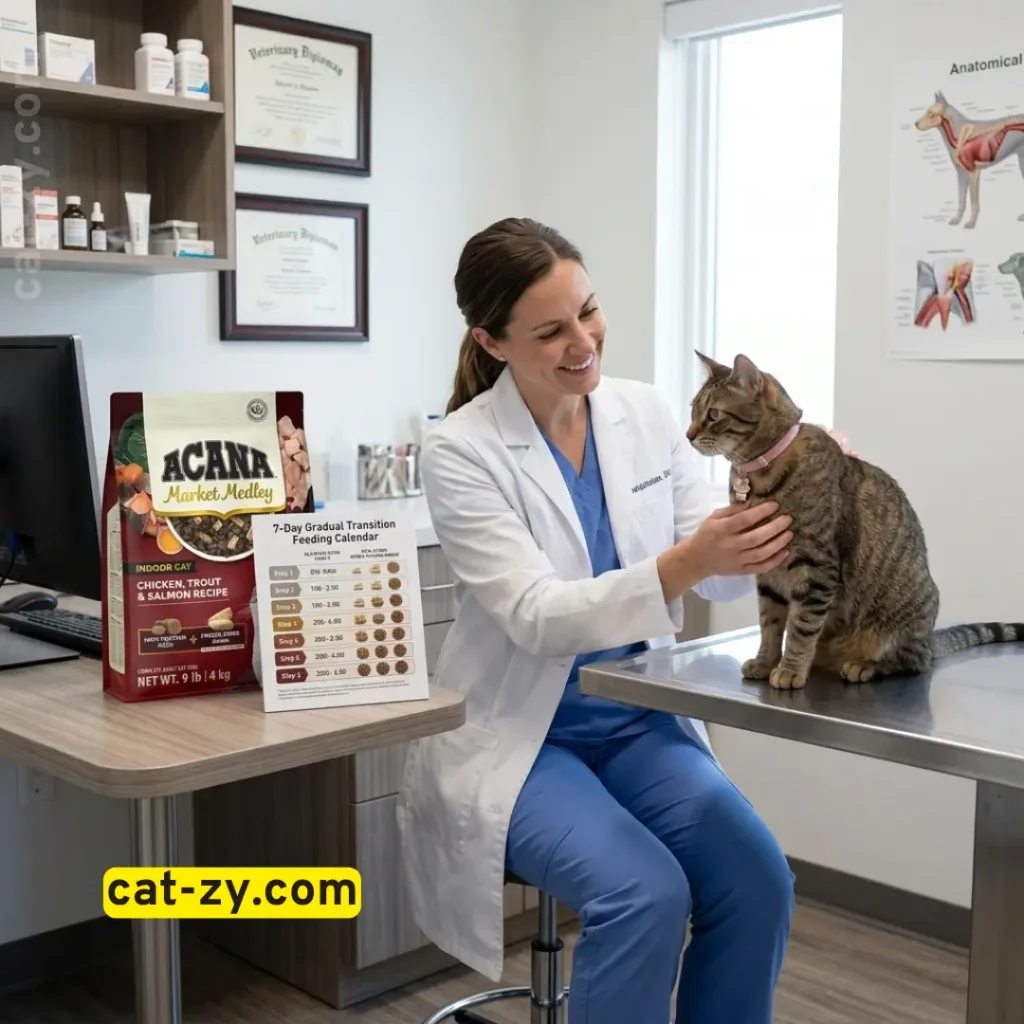
Acana Market Medley Indoor Cat Food tends to work best for healthy adult indoor cats without diagnosed food allergies, cats who need help with hairball frequency, and owners who want a higher protein content than what a budget kibble typically offers without jumping all the way to a raw or fresh-food diet. It’s also a reasonable fit for picky eaters who respond well to the aroma boost from freeze-dried morsels.
Potential Drawbacks to Keep in Mind:
While Acana Market Medley offers top-tier ingredient sourcing, potential downsides include its higher price point compared to standard grocery kibble and the richness of the protein profile, which can cause temporary loose stools in cats with sensitive stomachs if shifted too quickly.
When Should You Consider an Alternative?
Cats with diagnosed kidney disease generally need a lower-protein, vet-prescribed diet, and a high-protein formula like this one isn’t appropriate for that situation regardless of how it’s marketed. Cats with a known sensitivity to chicken, given how central chicken is to most Acana Market Medley Indoor Cat Food variants, may also do better with a true novel-protein or limited-ingredient formula instead.
As reviewer Luna Whiskerstone puts it: “Any diet switch, even to a food this well-formulated, should happen gradually. Give it seven to ten days, mixing in a little more of the new food each day, so your cat’s gut has time to adjust without the stomach upset that comes from switching all at once.”
Final Verdict: Is Acana Market Medley Worth It for Your Indoor Cat?
Choosing the right daily kibble requires balancing long-term dietary benefits with actual home performance. Acana Market Medley Indoor Cat Food stands out as a thoughtful, nutrient-dense choice that directly addresses the most common indoor challenges, particularly hairball management and picky appetites. By pairing concentrated animal proteins with raw freeze-dried toppers, it offers a level of quality and natural aroma that standard commercial formulas rarely match.
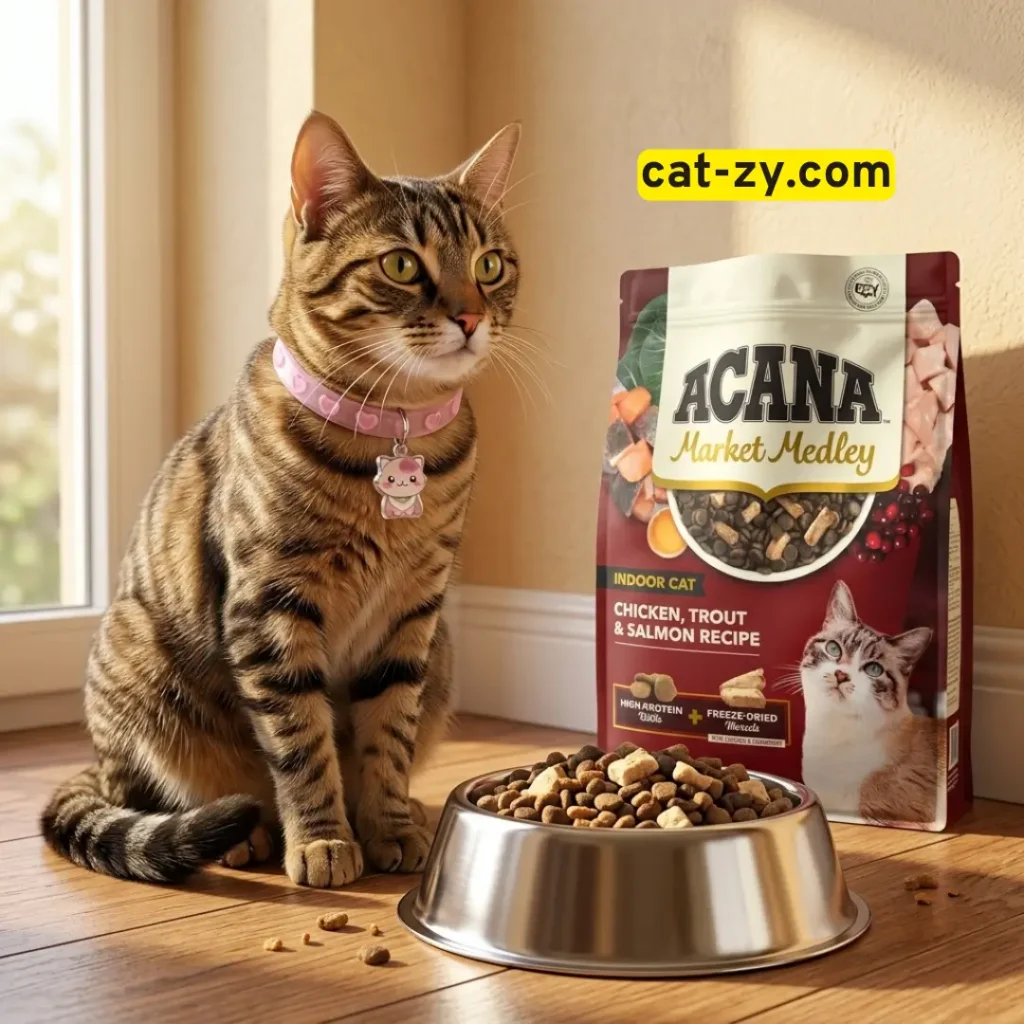
While the premium price point and high protein concentration require mindful portioning and a patient transition week, the overall value is clear for healthy adult felines. If you are looking to upgrade your cat’s routine with a formula that supports lean mass and daily vitality without relying on heavy plant fillers, Acana Market Medley Indoor Cat Food proves to be a practical, high-reward investment for your pet’s bowl.
- High-protein profile (38% crude protein) featuring named quality animal ingredients like chicken, trout, and salmon in the top five slots.
- Delivers up to 15% dietary fiber from specialized plant sources like miscanthus grass and pumpkin for exceptional hairball control.
- Includes raw freeze-dried chicken and cranberry morsels that enhance natural aroma and palatability for picky eaters.
- Enriched with guaranteed live probiotics (such as Lactobacillus acidophilus) to maintain a healthy and balanced gut microbiome.
- Carries a premium price tag compared to standard commercial budget kibbles found in grocery stores.
- The high protein richness can cause temporary digestive upset or loose stools if not transitioned gradually over a 7 to 10 day window.
- Not suitable for kittens or cats with specific medical restrictions such as chronic kidney disease requiring low-protein diets.
- Heavy reliance on chicken and poultry options makes it less ideal for felines with diagnosed poultry or chicken sensitivities.
Comprehensive FAQ: Acana Market Medley Indoor Cat Food
Is Acana Market Medley Indoor Cat Food suitable for kittens or all life stages?
No. Acana Market Medley is formulated specifically for adult indoor cats. Kittens require higher calorie and nutrient levels to support active growth, whereas indoor adult formulas are deliberately calorie-managed. Transition your cat to an indoor formula only after they reach full maturity around 12 months of age.
Are the freeze-dried morsels in Acana safe for cats with sensitive teeth?
Yes. The freeze-dried chicken and cranberry morsels are significantly softer and easier to break down than standard dry kibble. However, if your cat suffers from severe dental issues or missing teeth, consider softening the kibble with warm water or incorporating wet food into their daily routine.
Does Acana Market Medley Indoor Cat Food help with hairball prevention in longhair indoor cats?
It provides strong dietary support. The formula contains up to 15% dietary fiber from pumpkin and miscanthus grass to help hair pass smoothly through the digestive tract. For long-haired breeds that shed heavily, combining this diet with routine daily grooming yields the best results.
How long does a 340g bag of Acana Market Medley Indoor Cat Food last an average indoor cat?
A 340g sample bag typically lasts roughly 7 days for a standard adult indoor cat eating 40 to 50 grams per day. Because exact feeding requirements depend on your cat’s weight and activity level, use a scale to calculate daily portioning rather than relying solely on bag size estimates.
Sources referenced: World Small Animal Veterinary Association (WSAVA) Global Nutrition Guidelines; Cornell Feline Health Center feline hydration resources. Ingredient percentages, guaranteed analysis figures, and pricing should be verified against the current product label and retailer listing before publication, as formulations and pricing can change between production runs.